 About 6 of our 7 acres (here’s an aerial view) is pretty scrubby woodland. I suspect that it was once apple orchard and/or pasture on pretty poor soils that were further compacted and depleted for 100 years or so of use and abuse. (Our house dates to 1863, and there was also a small cheese factory on the site.)
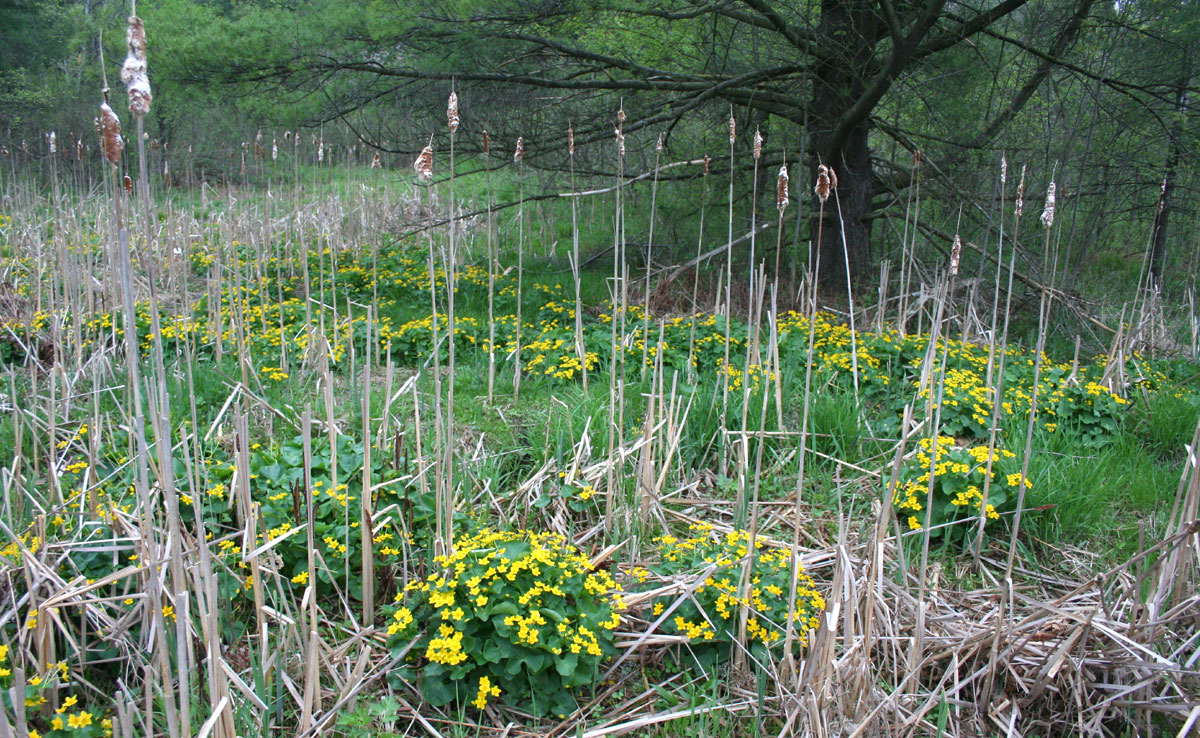
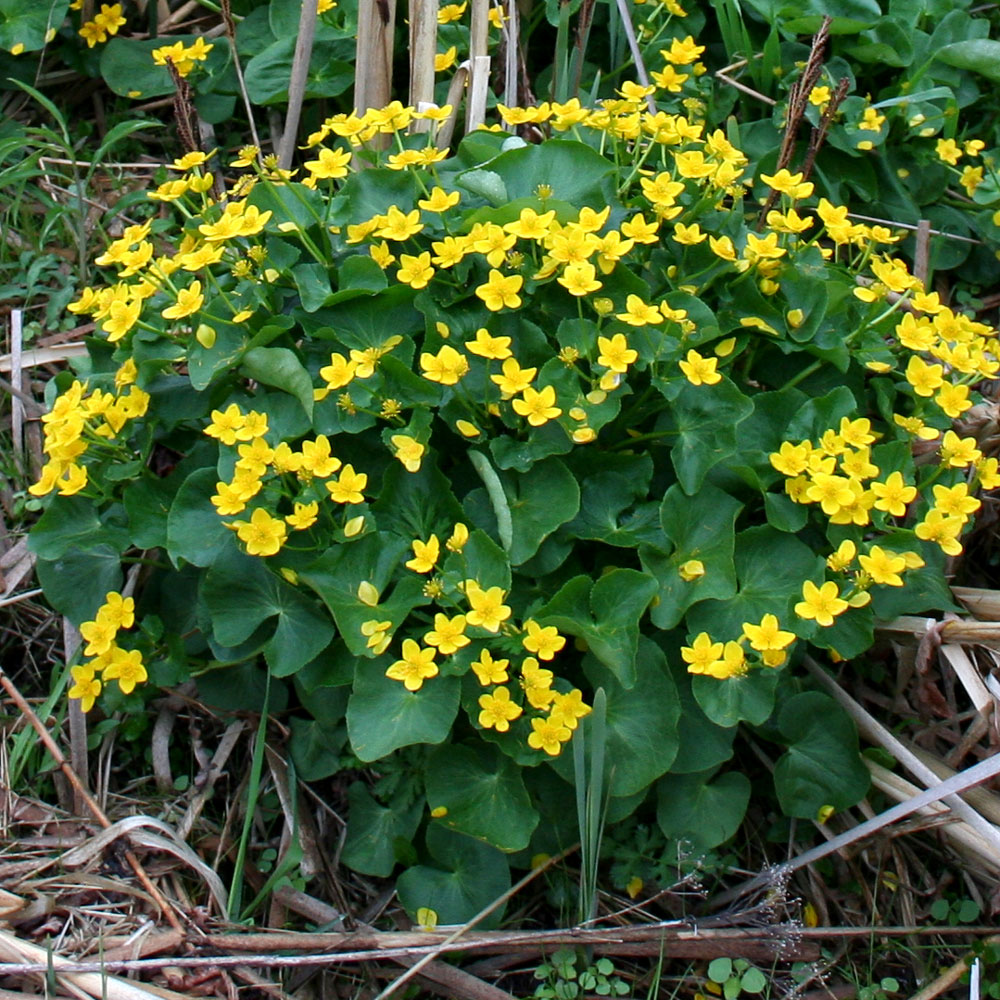
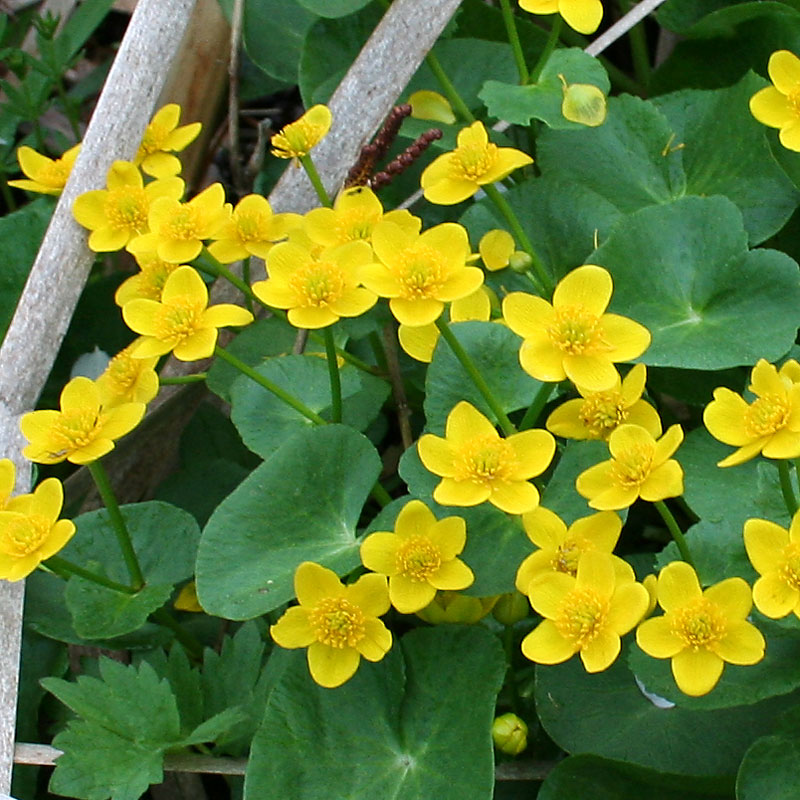
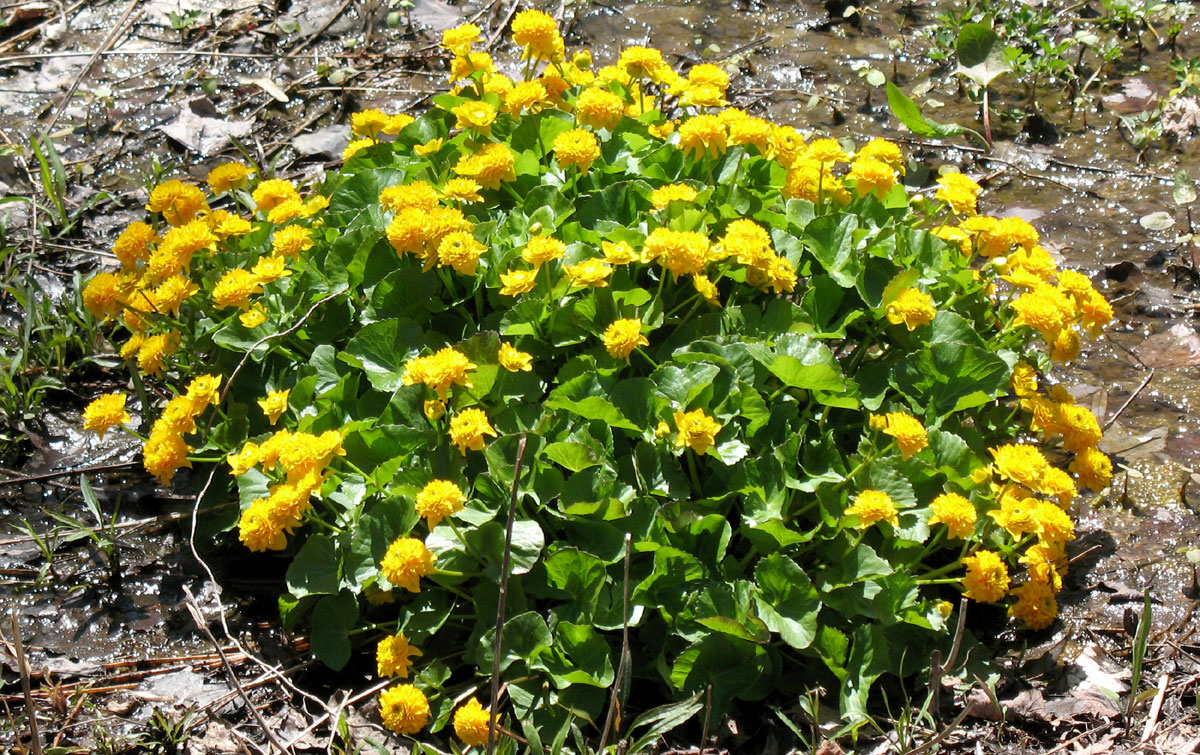
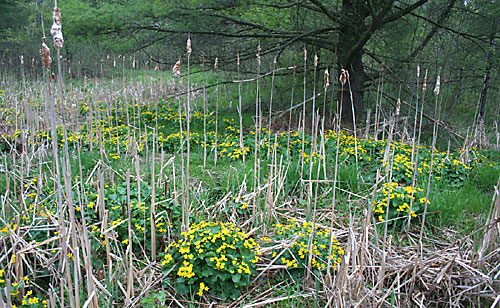
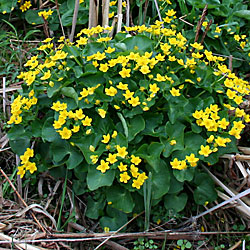
With the lousy soils, disturbance and heavy deer populations, there isn’t much exciting going on plant-wise out in the woods. But along the small stream and wetland that define the south edge of our yard, there is a great showing of Caltha palustris, aka marsh marigold or kingcup. (palustris = of the marsh.)
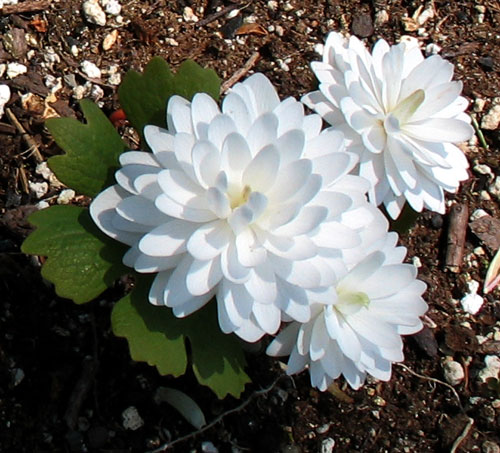
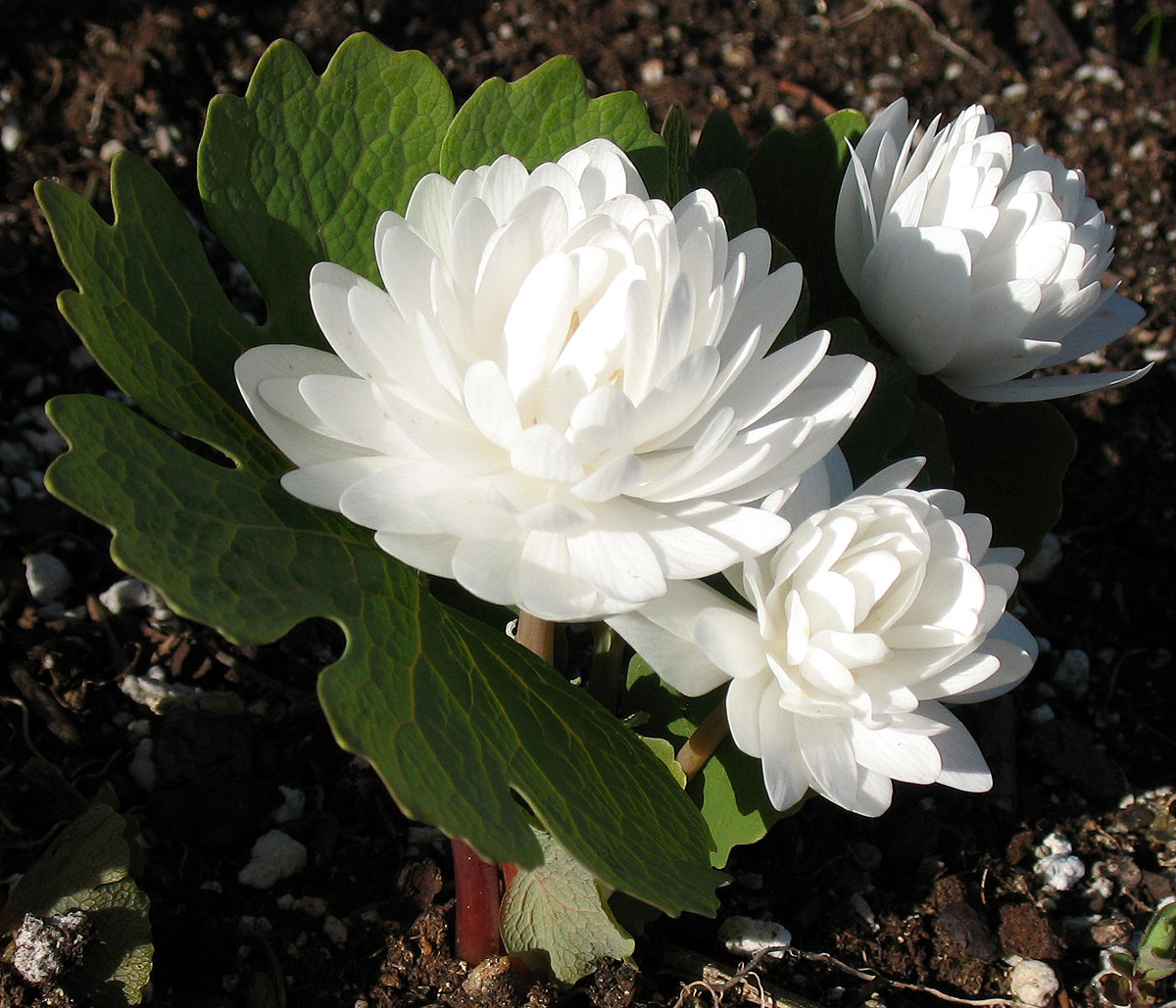
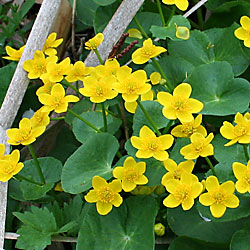 It’s not rare. You can find it in wet areas across northern North America, Europe, Russia and Asia. It’s poisonous and a skin irritant, so the deer leave it alone. Here’s a nice botanical drawing from 1885 and a double-flowered variety from a co-workers garden. The photo is fuzzy, but it’s a spectacular plant.
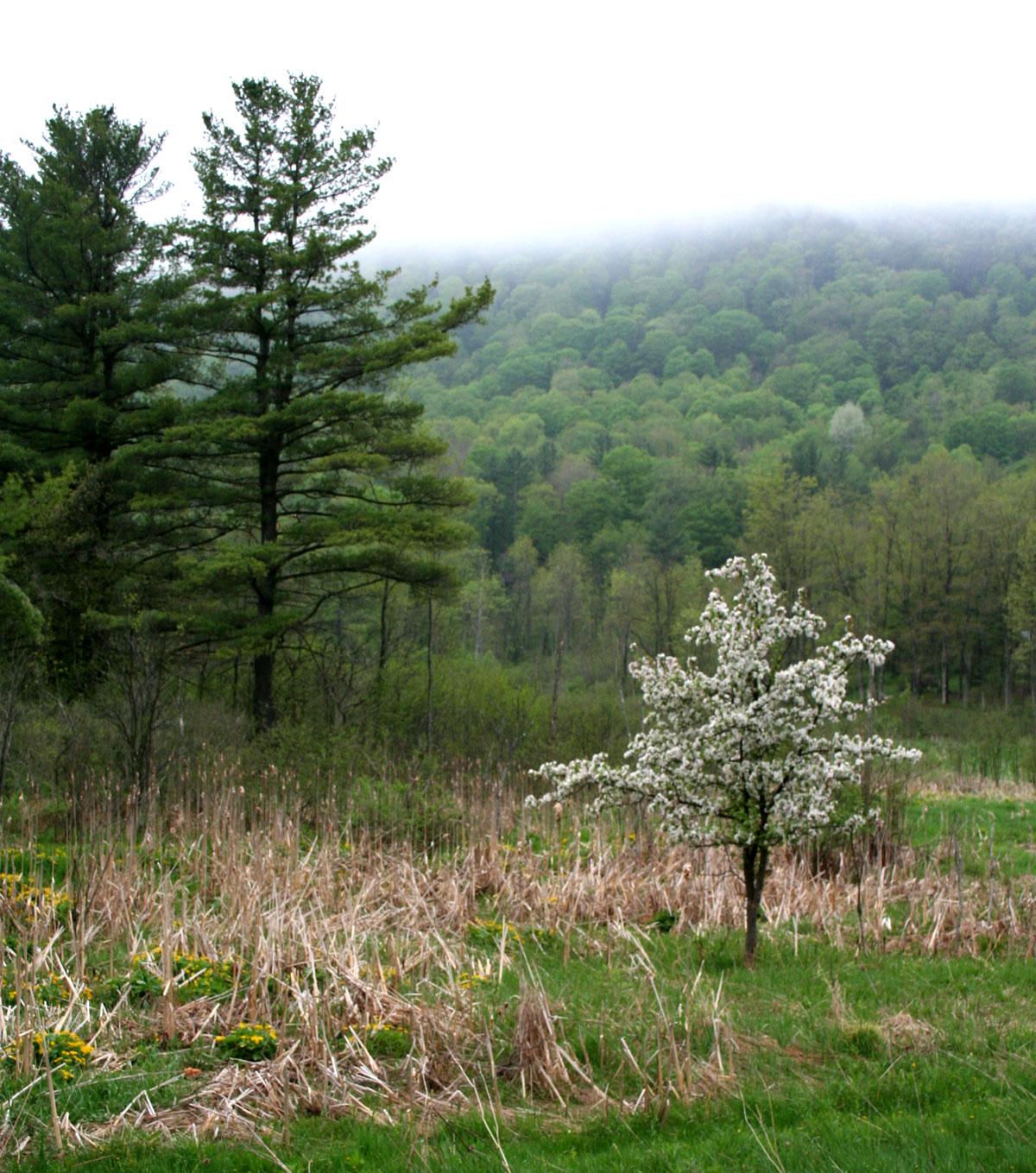
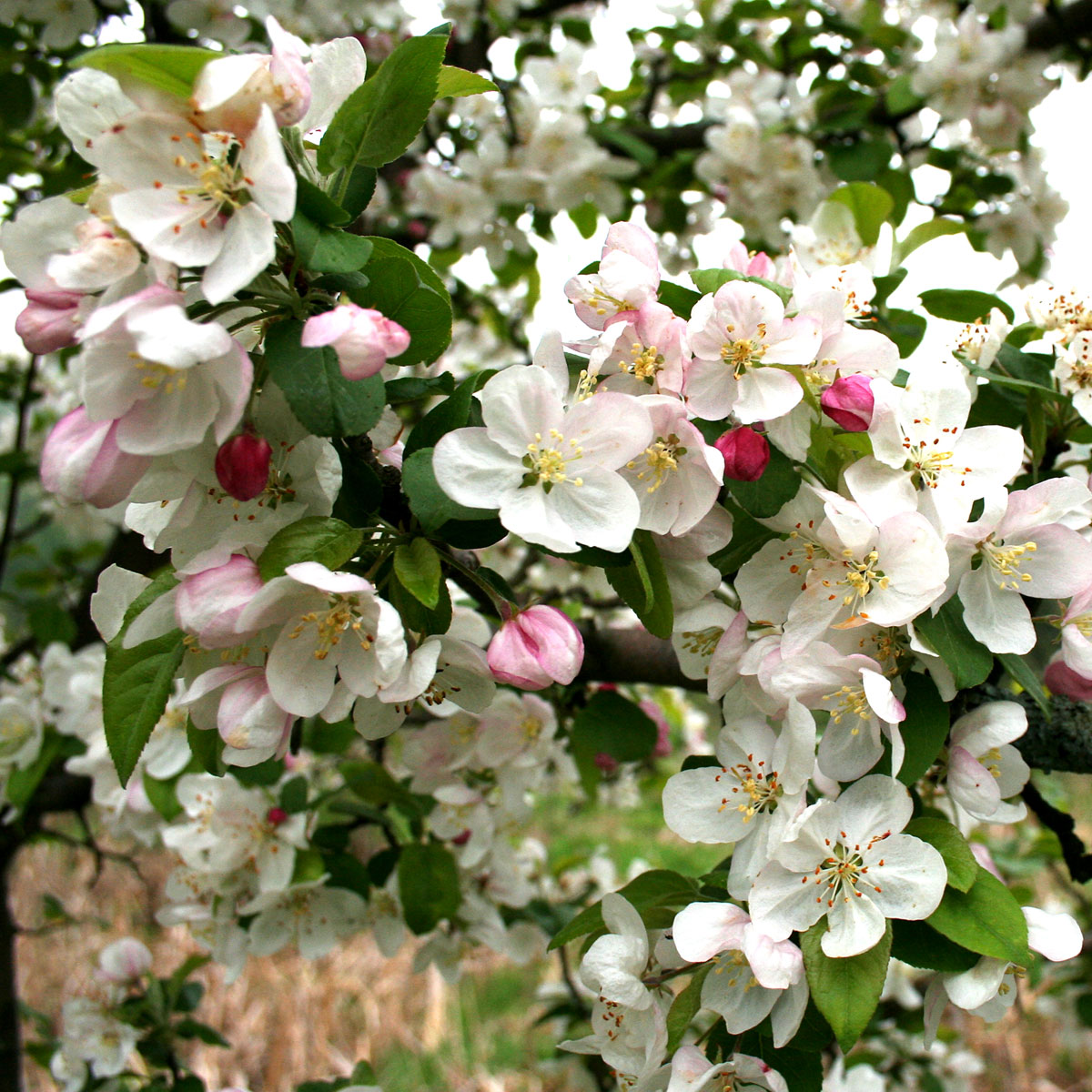
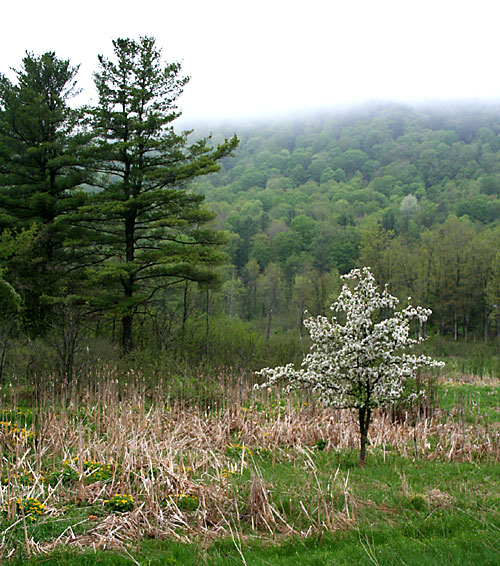
There’s a little bit of high ground that extends into the wetland, where there’s more grass than cattails. Growing out of that high spot is what I call the lone crabapple, but I suspect that it’s a seedling from one of the trees that formerly dotted the property, maybe with some cider apple lineage in it. There is one huge (30-foot-tall) ancient apple tree on the edge of the wood that looks dead in winter but leafs out every spring. It’s flowering profusely this spring. When it does manage to produce a few fruits, they are white-skinned, usually with a little green algae-like cast to them.
Anyway, the lone crab is on an alternate-year flowering schedule. This year is its year and it’s covered with flowers. On off years, there’s a mirror image of it flowering 200 yards away to the west on the other side of the main wetland. You can see it from the kitchen and bathroom windows. It couldn’t be better placed, though I would never have thought to put it there.
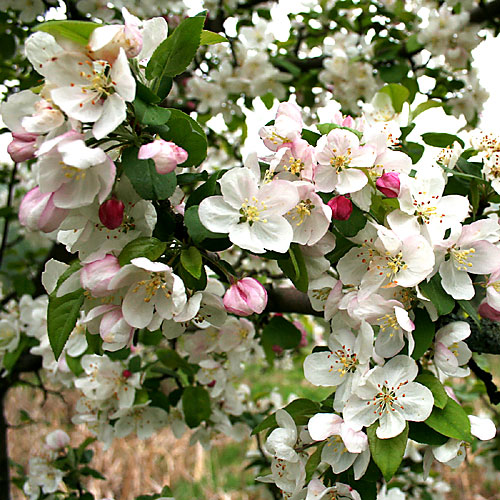
The flowers close up.

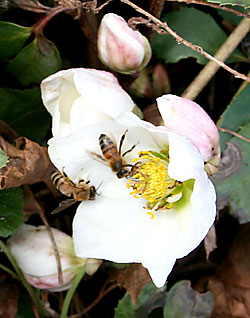 Colony collapse disorder (CCD) continues to get ink all over. This morning, there was a