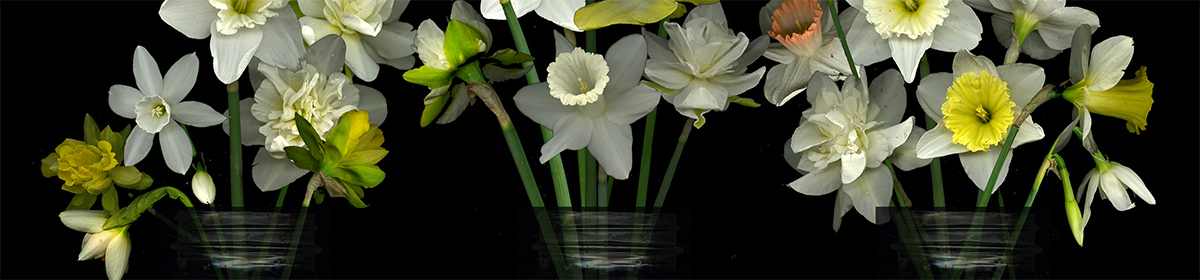
Bloom day scans: Mugshots and Dragon Day

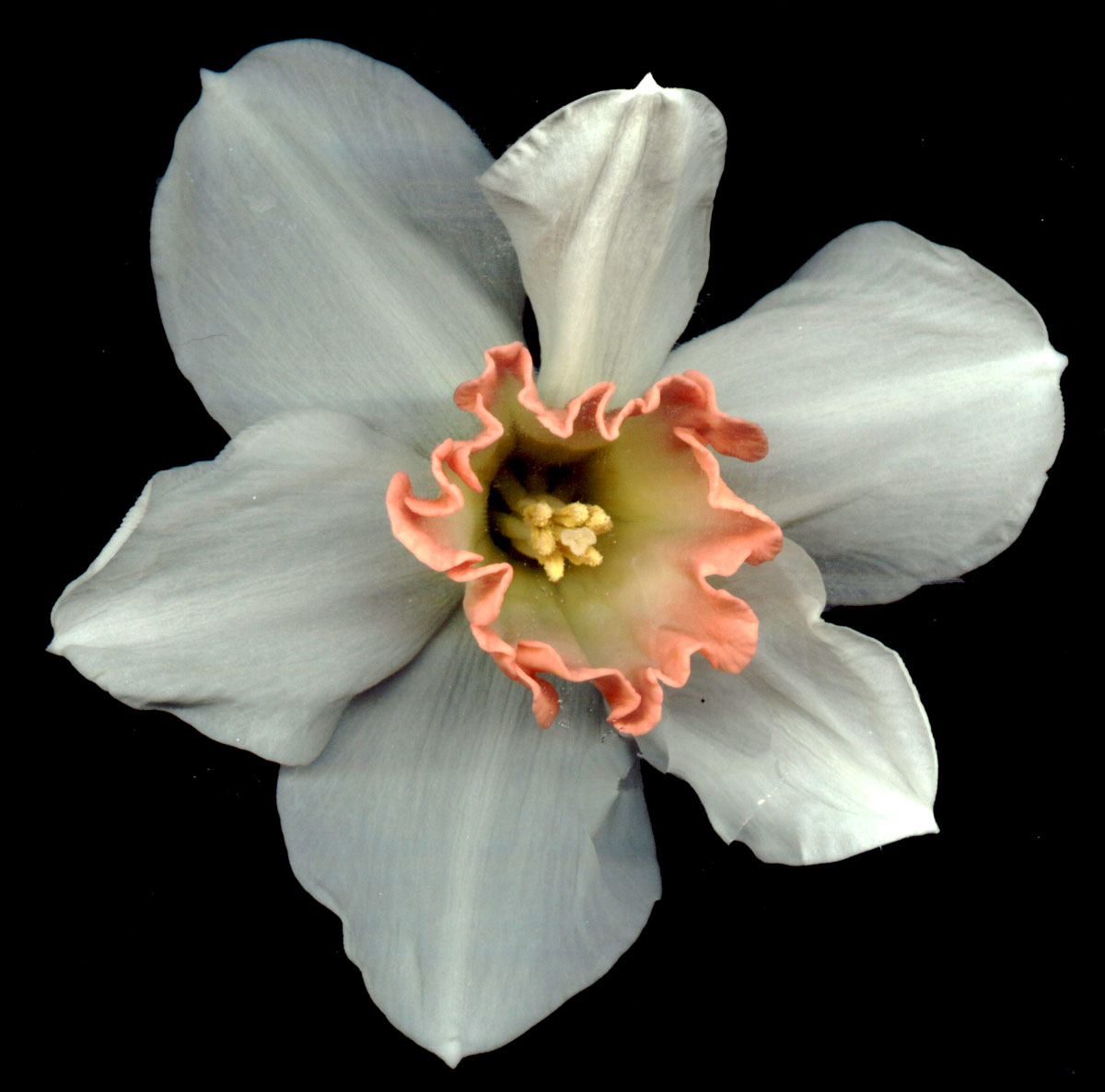
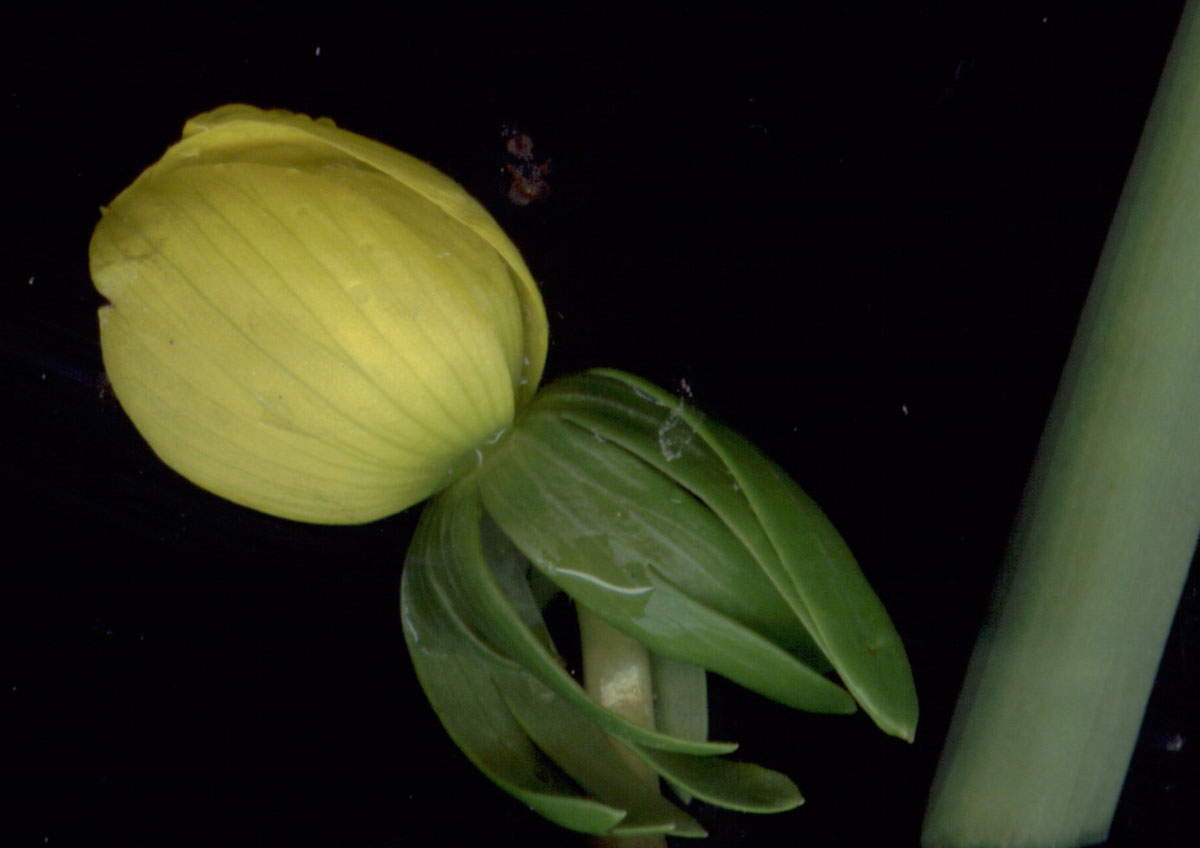
dragonLack of time and not much happening in the garden leaves me with just a few sloppy scans I squeezed in this morning. A forced narcissus from inside and an eranthis about to bloom outside — about the only thing outside that I can count as a bloom.

I have to remind myself that it’s only Dragon Day. Actually, Friday was Dragon Day, the last day of classes before spring break at Cornell. Spring break is a euphemism around here. Officially, spring is still a week or so off. And it’s at least a month until we start getting consistently spring-like weather in these parts.

Basically, the annual Dragon Day ritual at Cornell has the first year architecture students crafting a large dragon that they parade across campus. They are met by a phoenix built by the engineering students. Everyone ends up back on the Arts Quad where they burn the dragon. (This video from 2007 shows how crazy and creative this event really is.) Then everyone goes home for a week. Actually, judging from the tans of returning students, many go someplace much sunnier.

We still have the annual Skunk Cabbage Run and Tax Day (which brought us a Nor’easter last year) to punctuate spring before we really get cranked up for gardening season.

View dragons from the last 10 years, and see more coverage of this year’s Dragon Day in the Cornell Chronicle and Ithaca Journal.
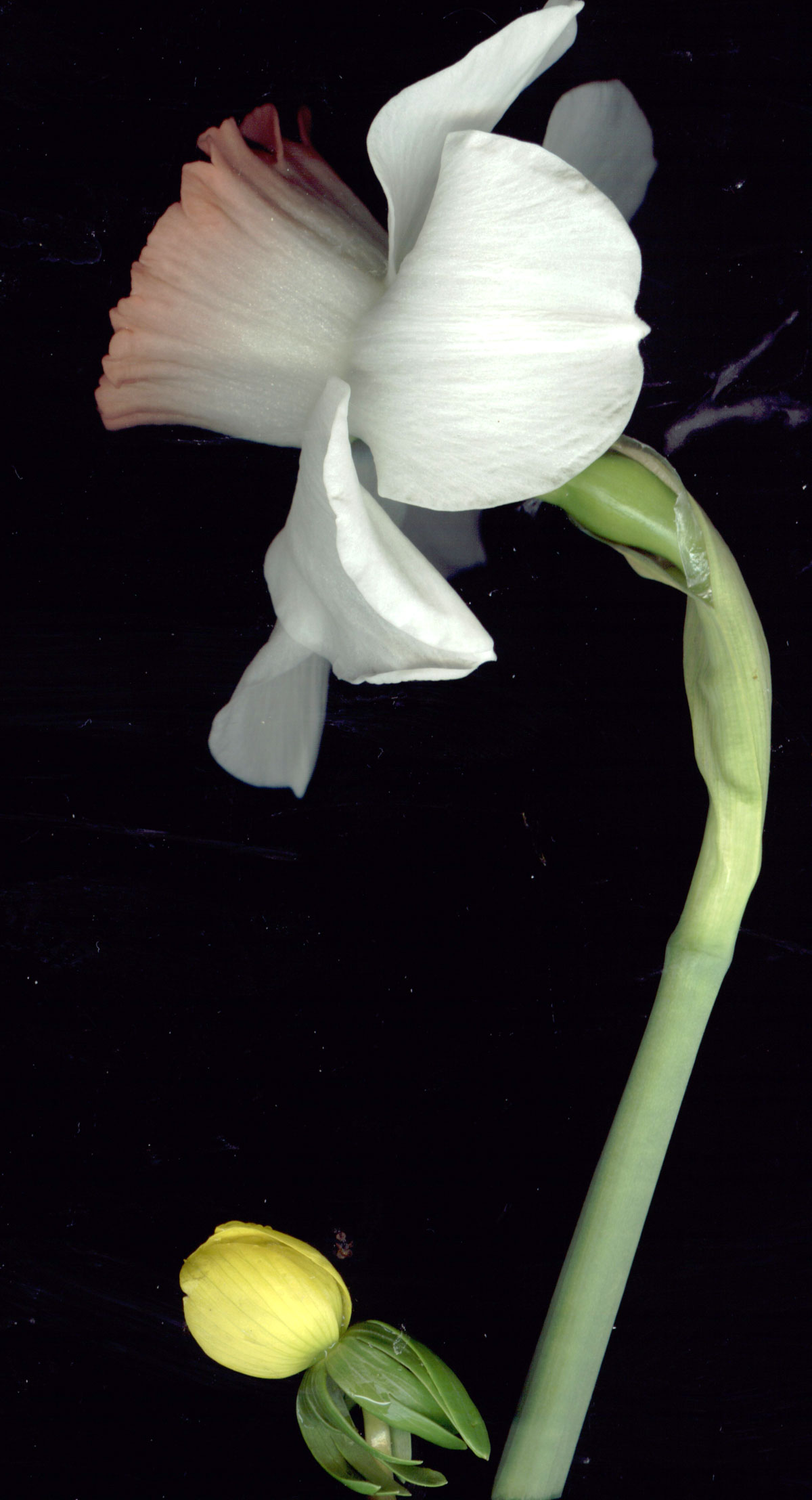
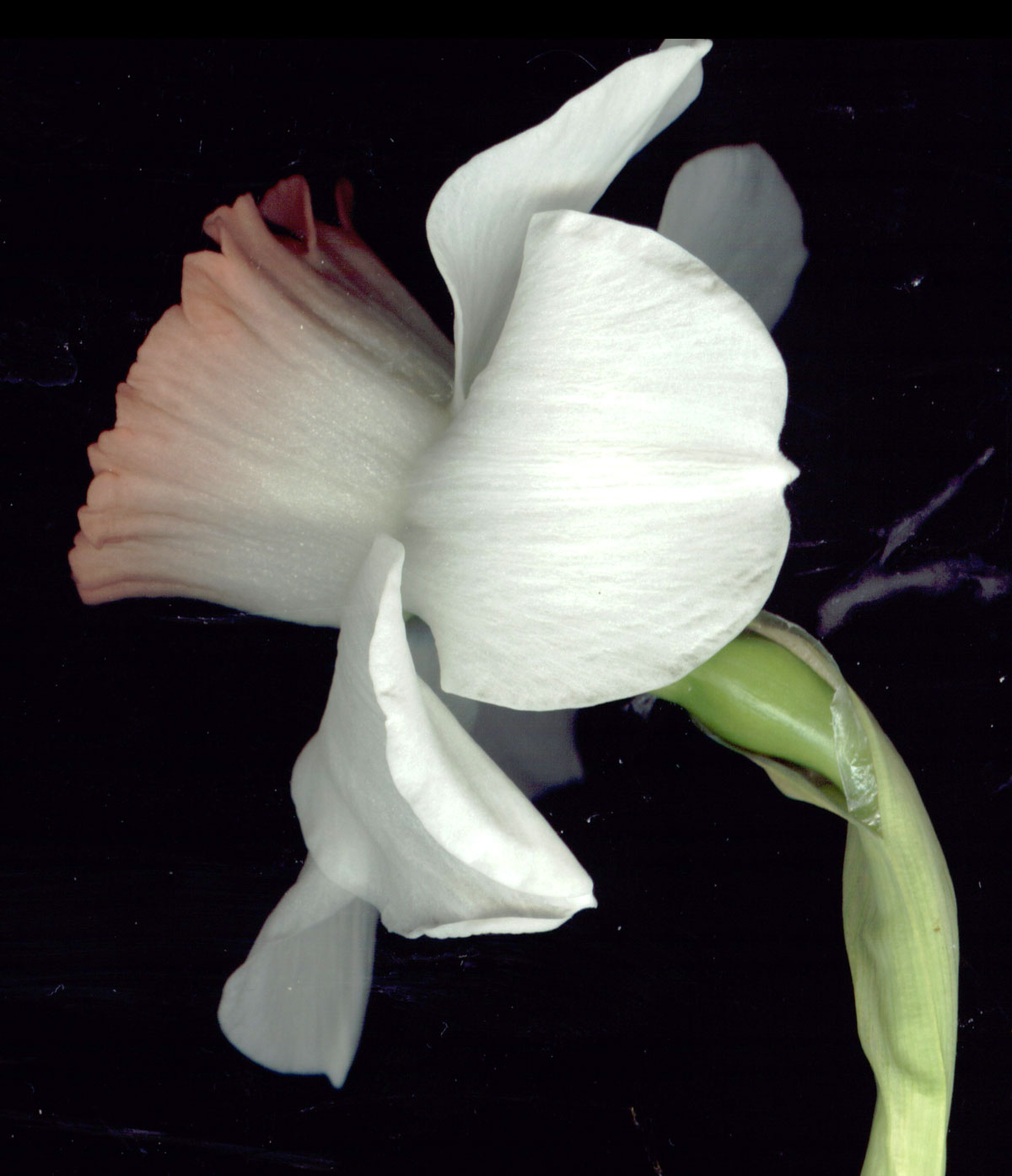
narcissus and eranthis

narcissus

narcissus

eranthis

February bloom day scans

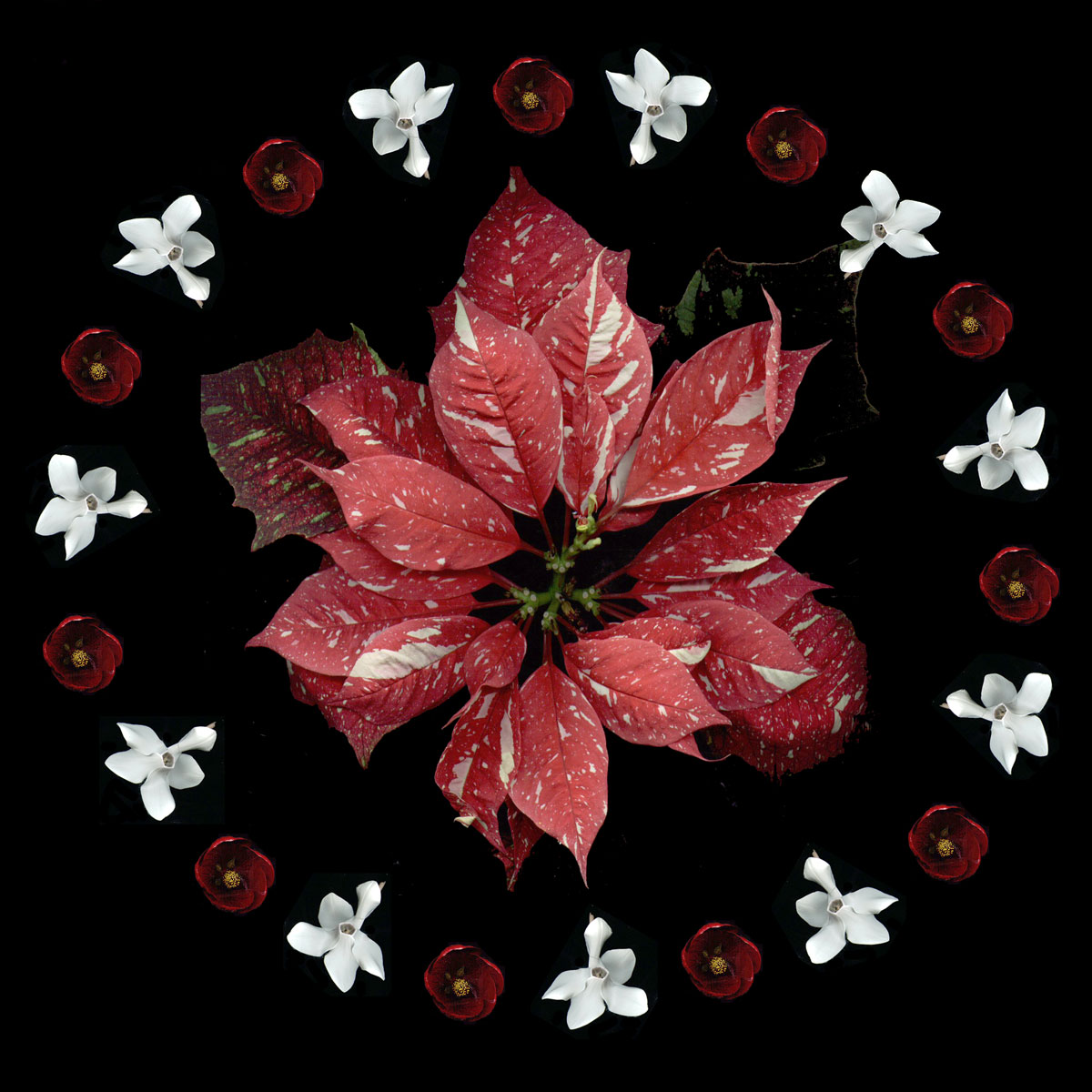
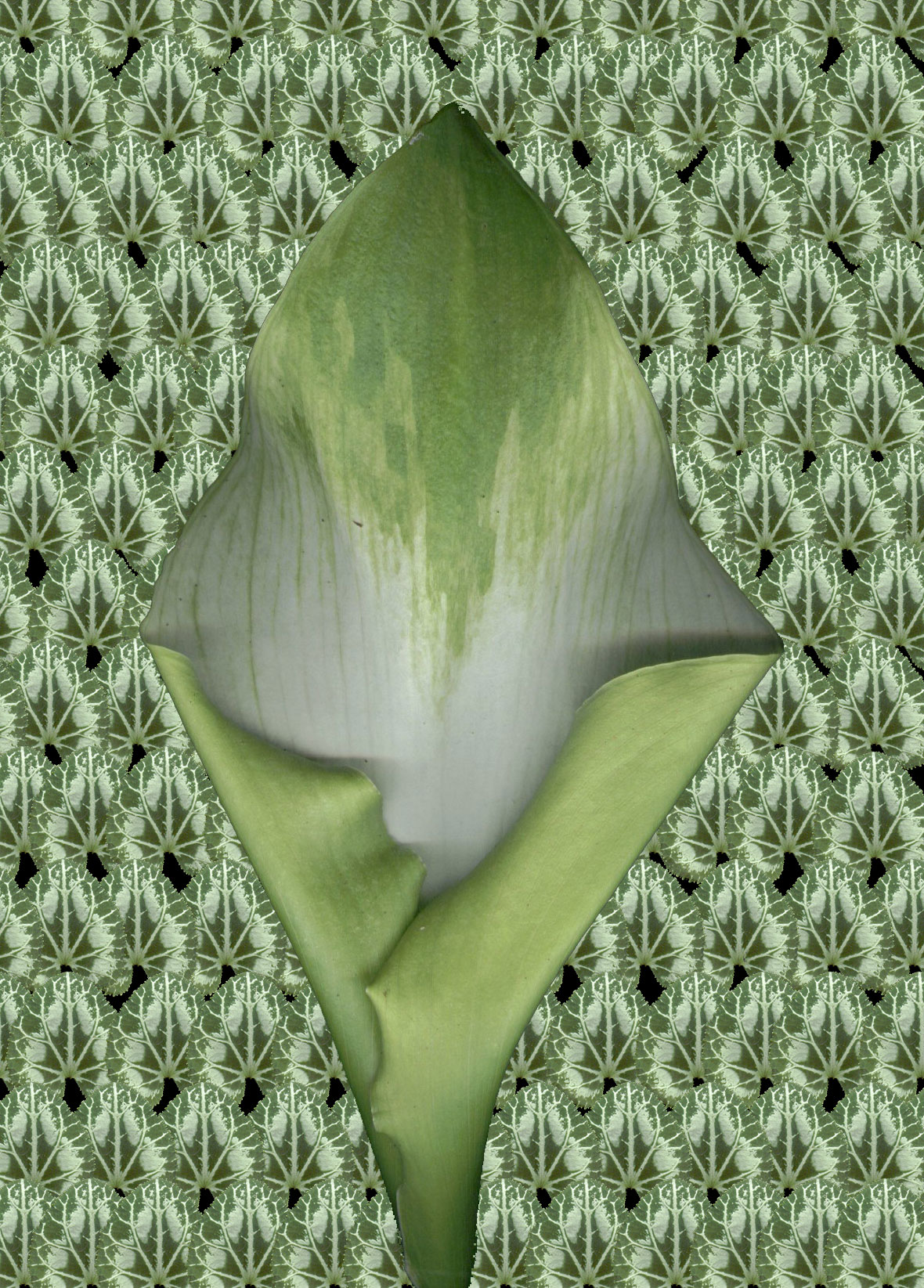
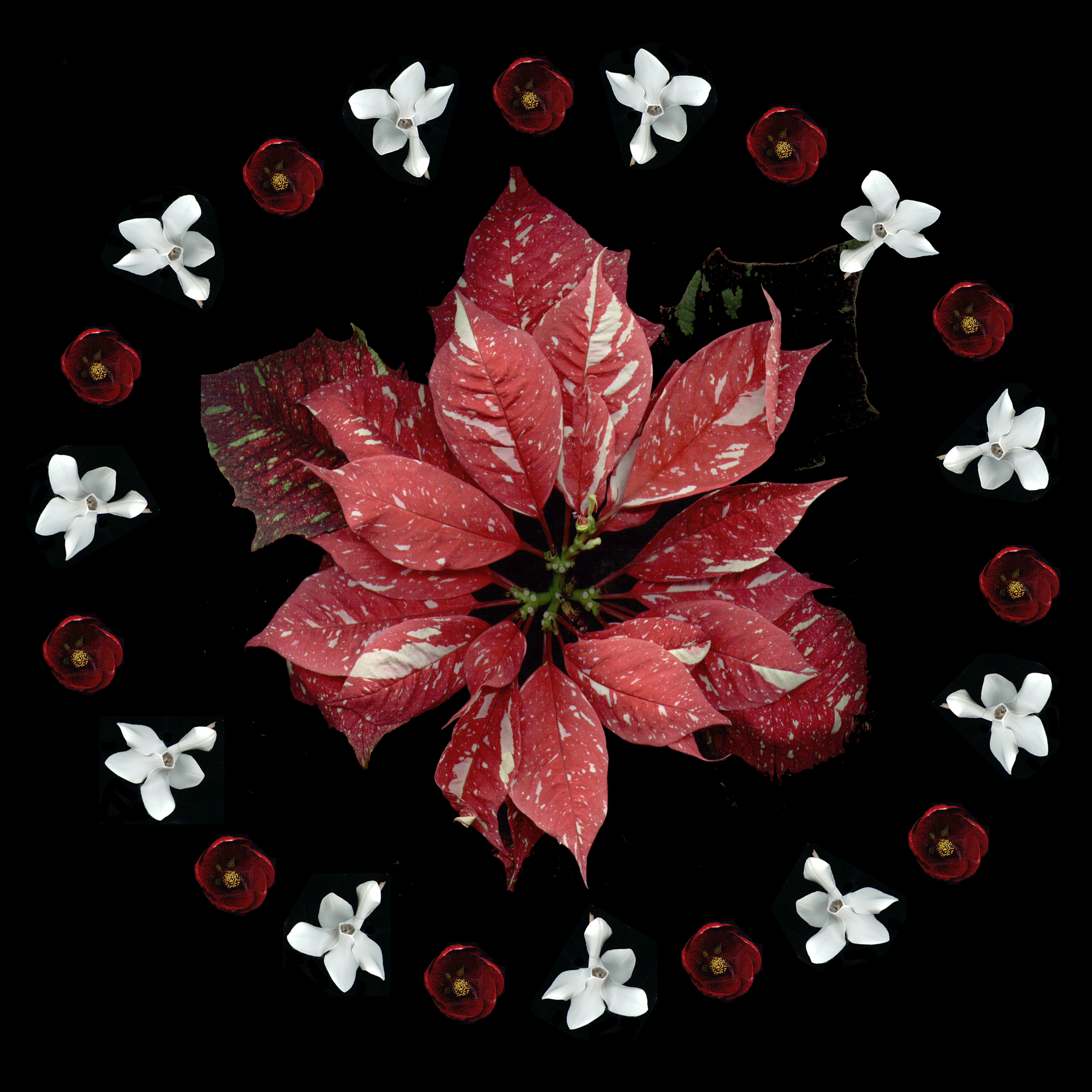
Like Kathy at CCG, nothing but snow and ice outside. But I scanned a few inside plants (houseplants and an overwintering Albutilon that’s flowering to beat the band) and fiddled with them.

Poinsettia | Cyclamen | Albutilon

Poinsettia | Cyclamen | Albution
x2400 pixel version

Calla | Cyclamen foliage

Poinsettia | Cyclamen | Albution

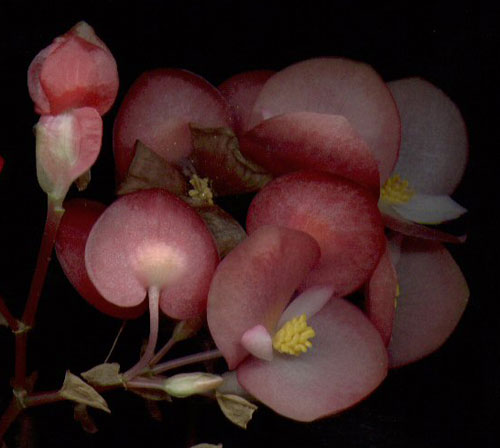
Just a begonia.

begonia

Updated 2/17: Forgot to link to Kathy’s post and I changed the timestamp to keep this on top for awhile.

Belated bloom day scans

This morning, I finally had a chance to get out into the garden with enough light that I didn’t need a flashlight to see what was there. Were it not for the recent cold (seasonable, actually) weather, I thought I might actually be able to scan some things that most reasonable people would actually consider blooms. But all I found really were materials suitable for dried flower arrangements, which I usually put together over the Thanksgiving holiday, anyway.

So, this may be my final bloom day scan until March — unless we have another mild winter and we have snowdrops in January like last year.

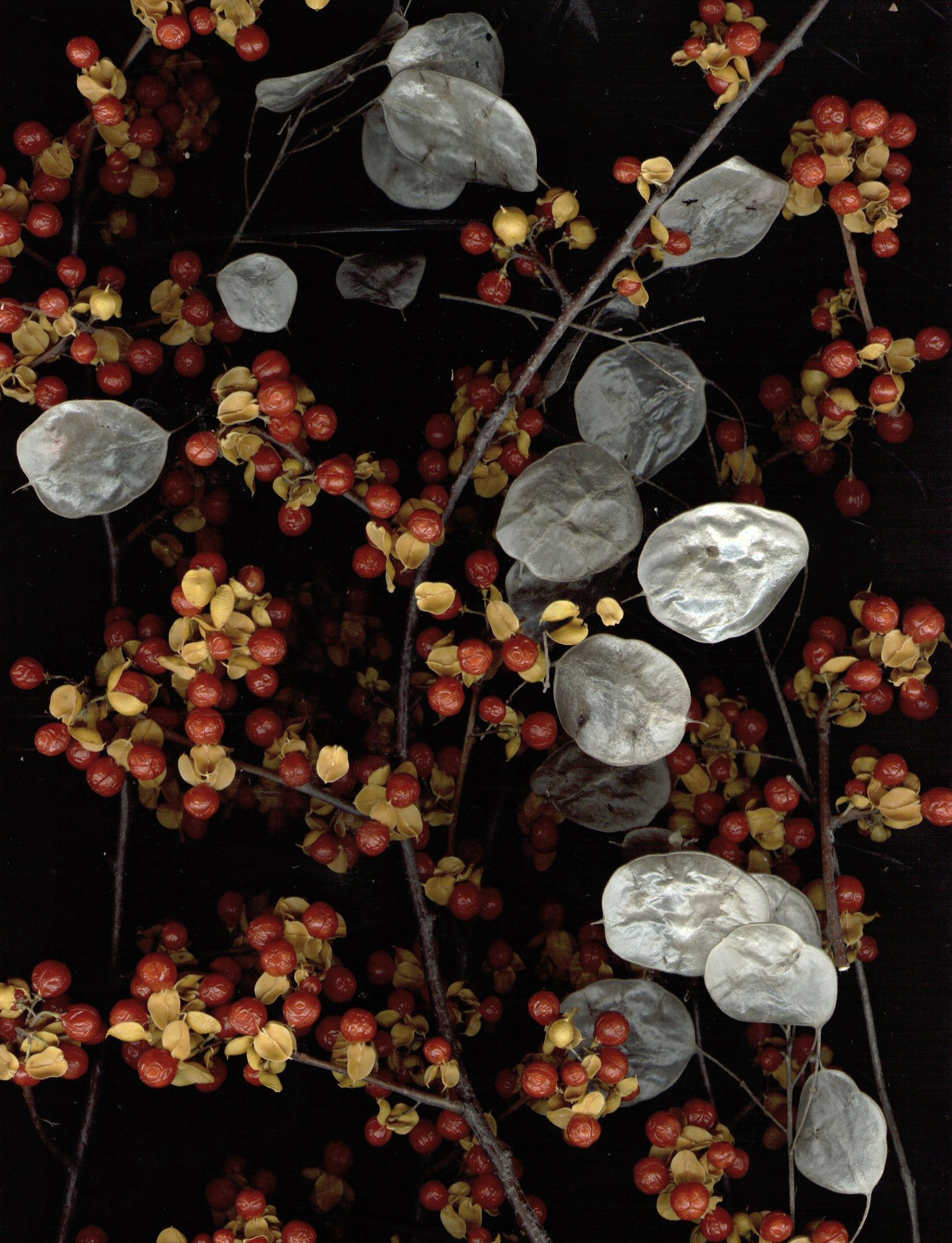
Ornamental grass wrapped in thunbergia, lunaria, milkweed, ironweed, motherwort, bittersweet.

nov scan

Heuchera, clematis, milkweed(?) seeds that happened to drift in during composition.

nov scan

In lieu of bloom day scans

A few years ago, I attended a lecture by Felder Rushing, who is neck-and-neck with Piet Oudolf in the race for most influential gardener in my life.

At the beginning of his presentation, Felder wanted to point out that not only were we crazy plant people, but we were strange even by standards of gardeners in general. He asked for a show of hands to a series of questions starting with, How many of you grow more than a dozen varieties of a single species of plants? More than half gardeners in attendence raised thier hands

The question that really got me was, How many of you have ever given a tour of your garden by flashlight?

Well, honestly I haven’t. But I wouldn’t hesitate to.

If I wanted to do my usual bloom-day scans, I would have had to use a flashlight because light is pretty scarce around here before and after work. Bloom day scans will have to wait for the weekend.

Meanwhile, I’ve had a bunch frosty and fall-color pix collecting here over the past couple of weeks. So instead of scans, here’s a chance for my usual pix purge.

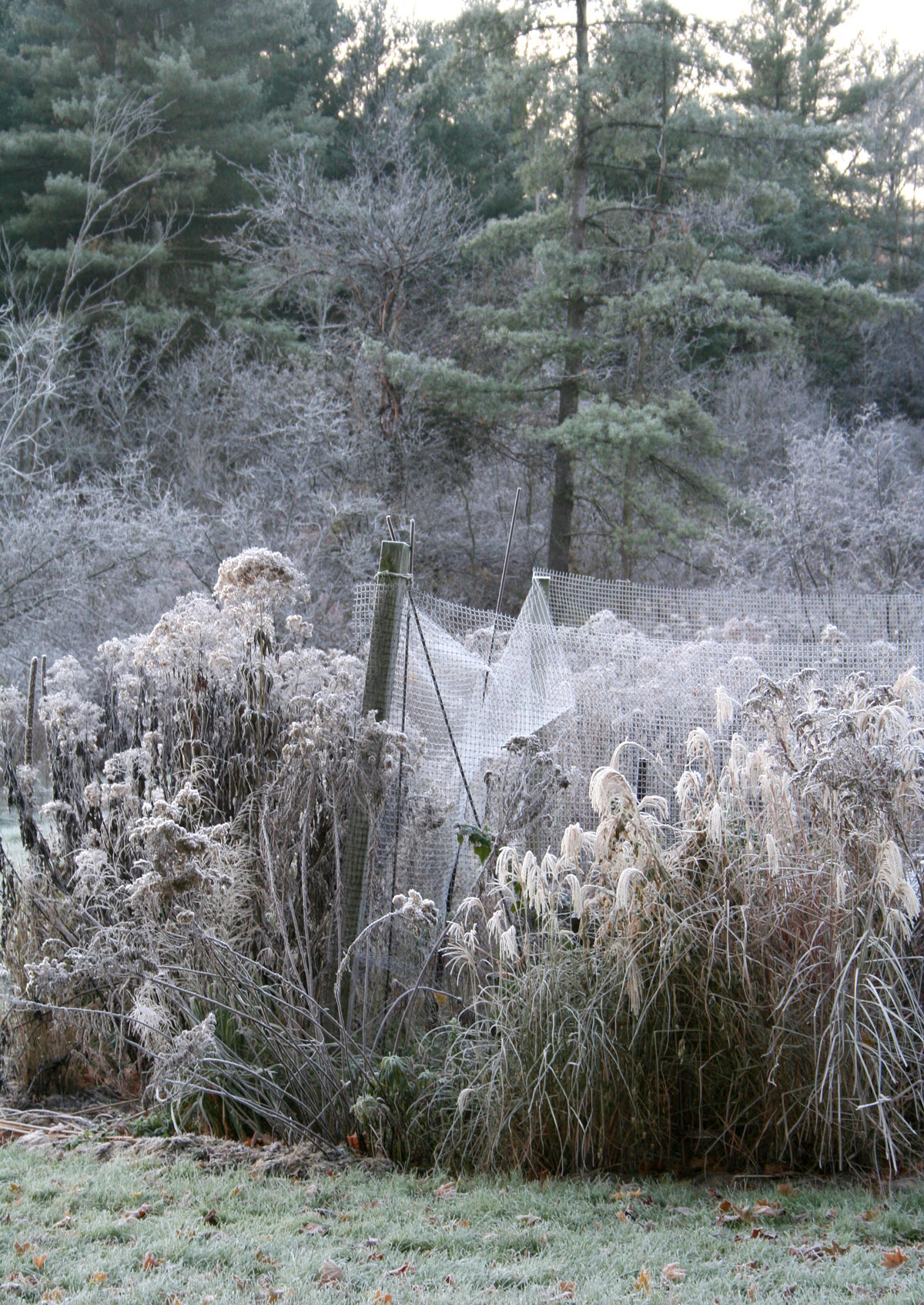
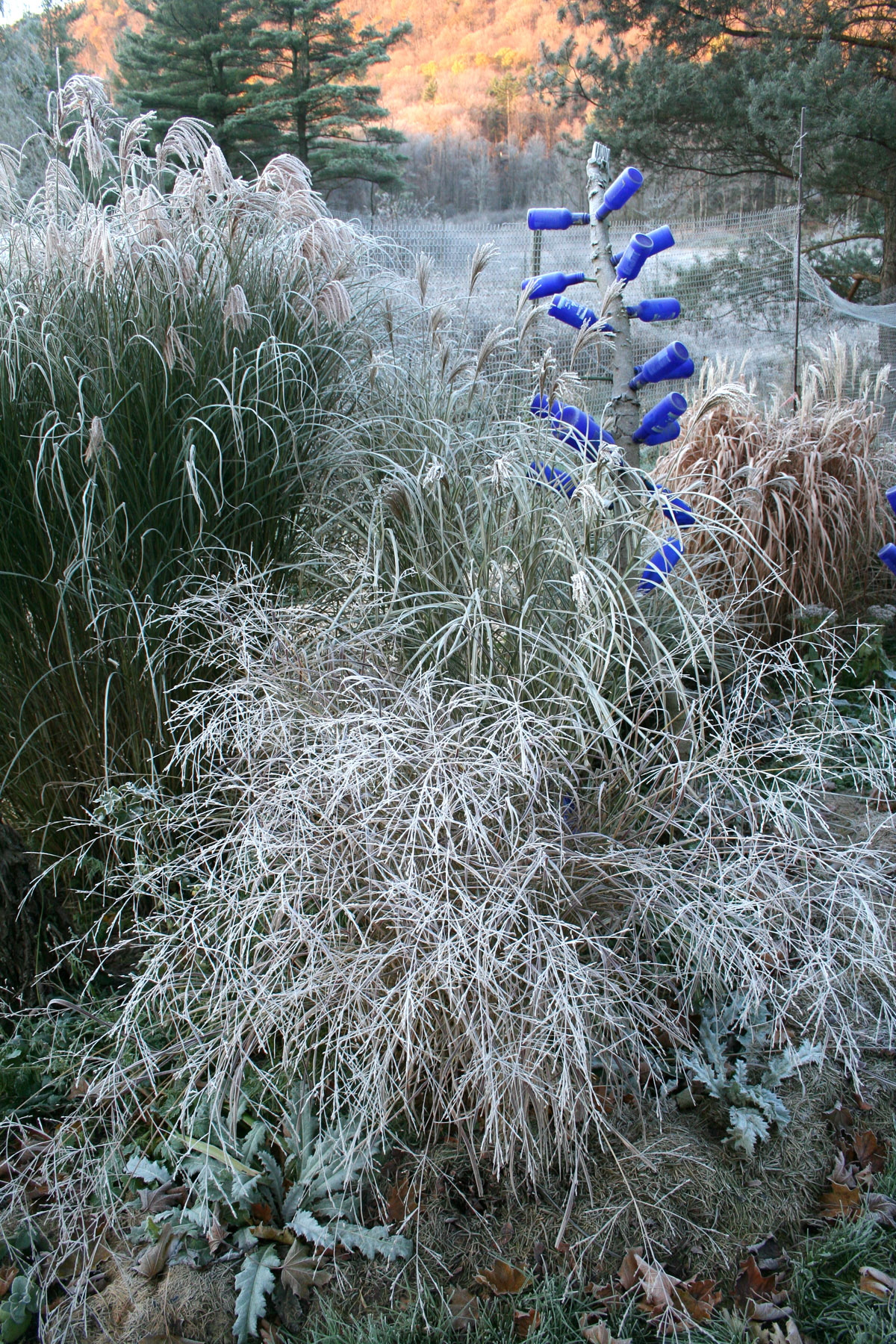
Really hard frost (~19 F) last Sunday:

frost on grasses etc.

Sunrise has hit the far ridge, but hasn’t hit the garden yet.

frost on grasses etc.

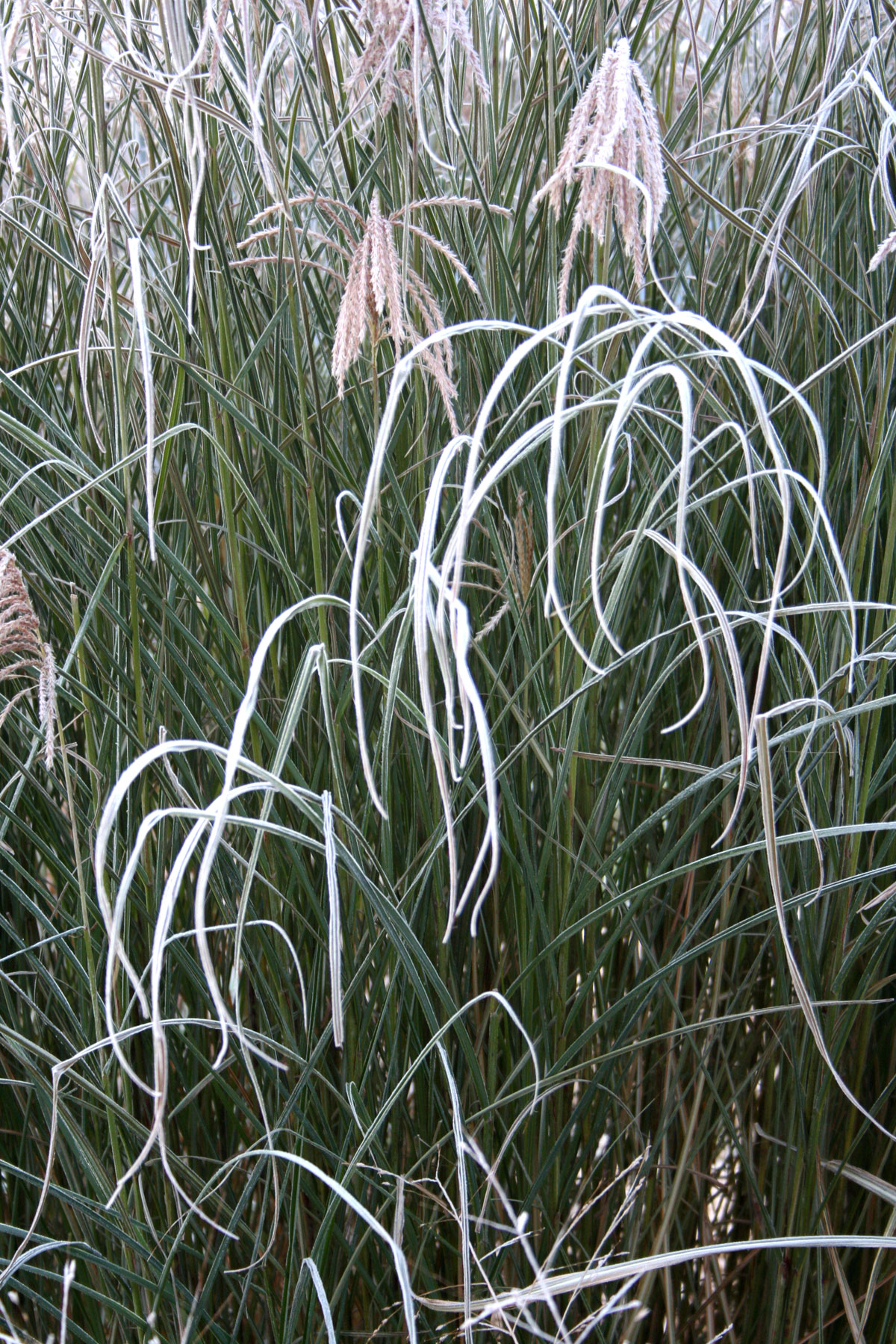
Frost patterns in the miscanthus.

frost on grasses etc.

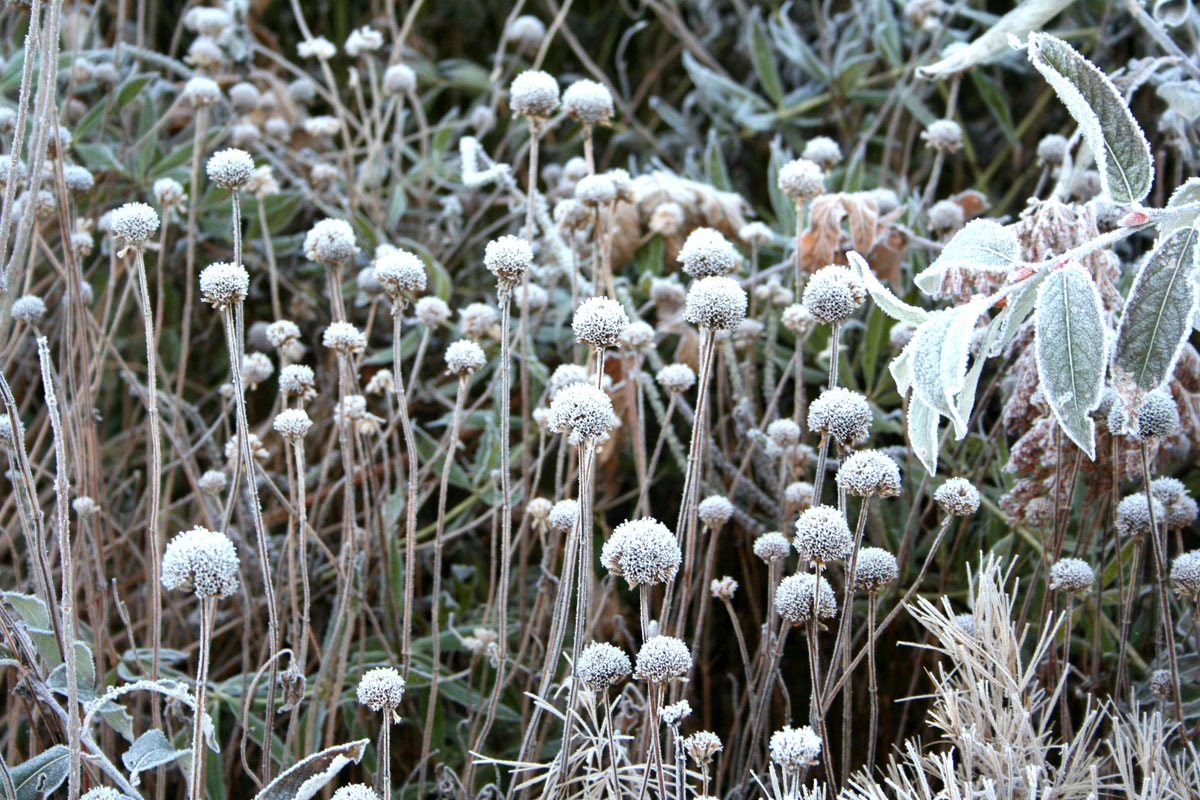
Frozen monard dots. (Thanks Piet.)

frost on grasses etc.

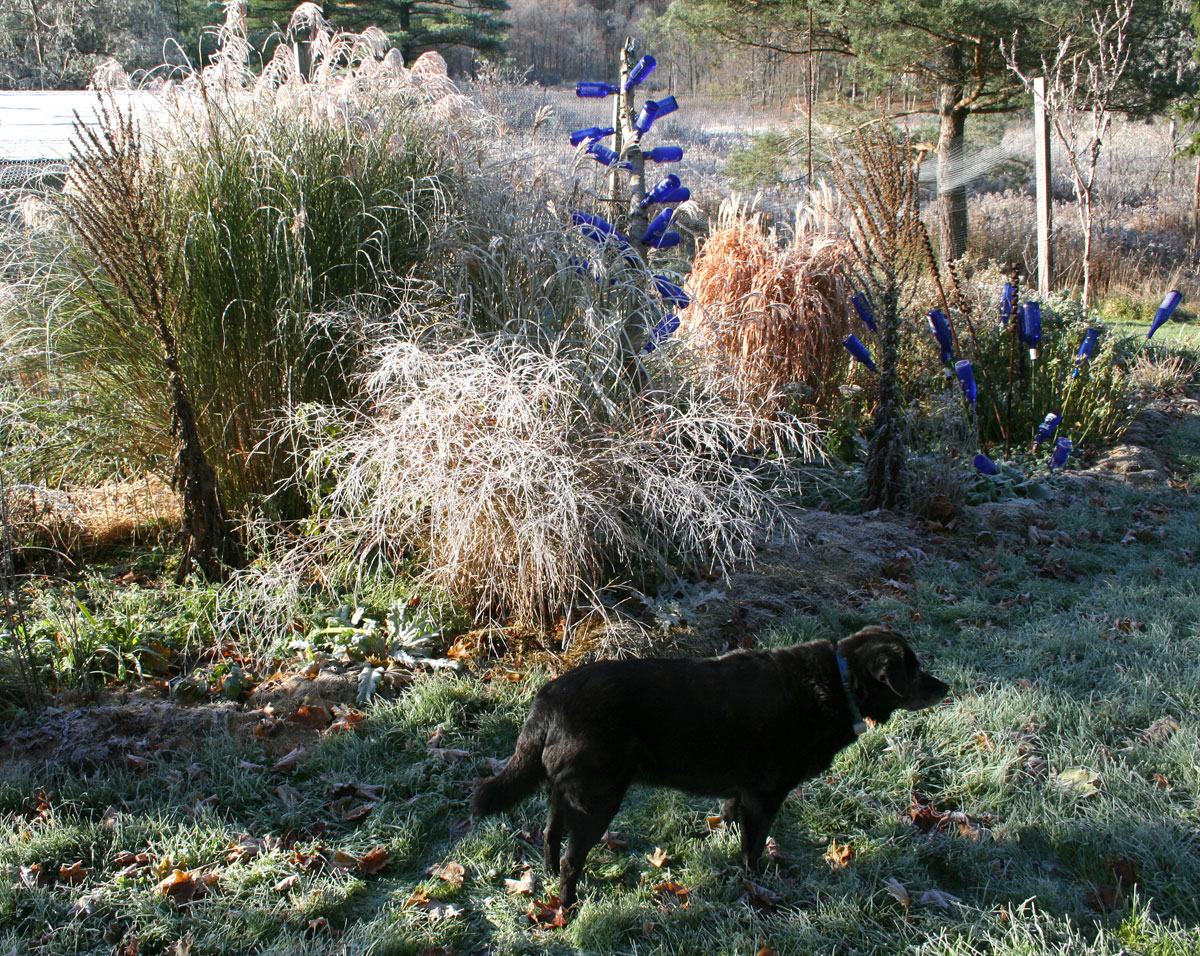
Jade and the plants soak in the sun as it burns off the frost.

frost on grasses etc.

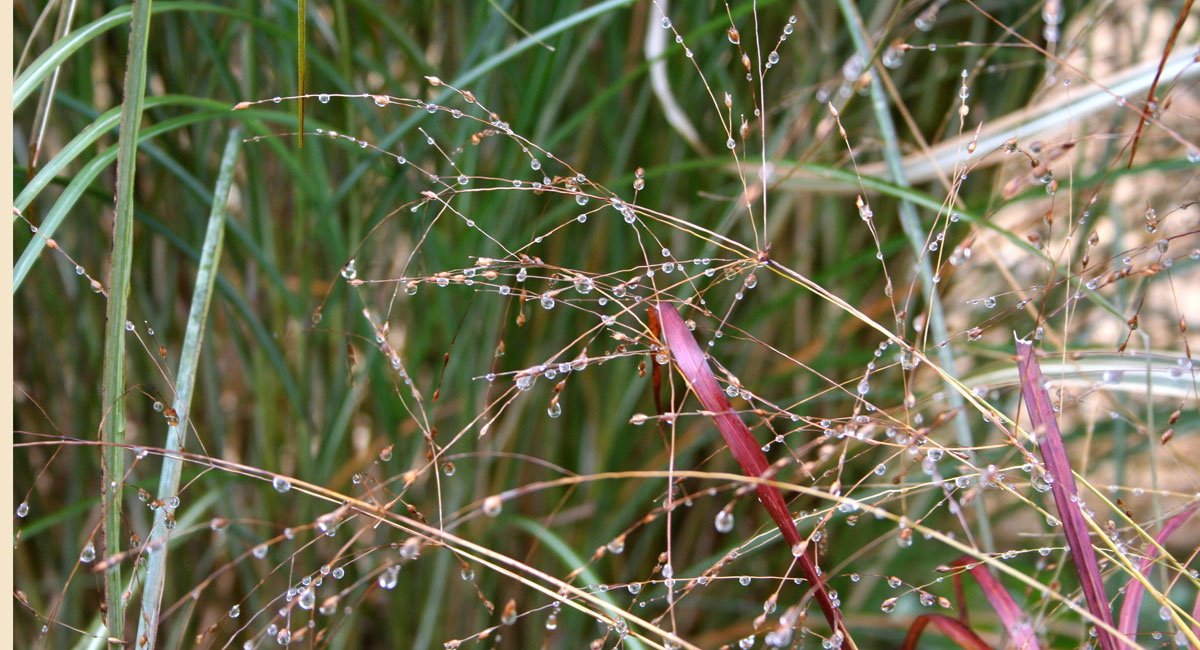
Beads of water after the sun melts the frost.

frost on grasses etc.

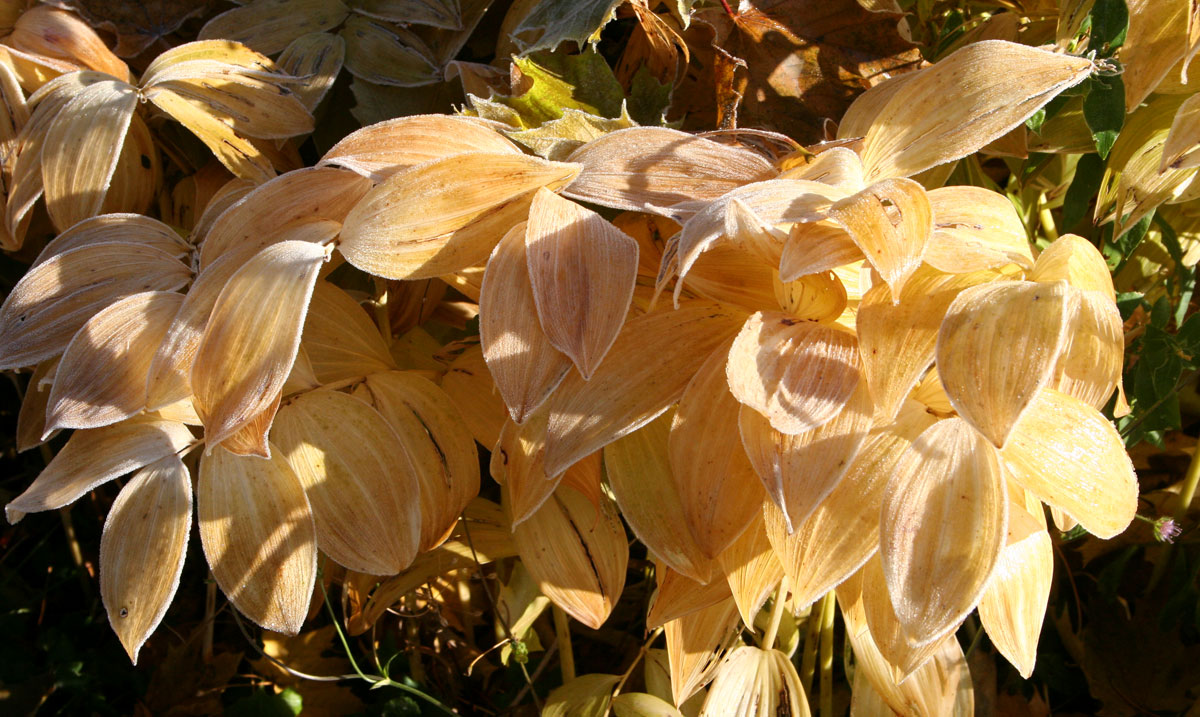
Morning sun on Solomon’s seal (Polygonatum)

frost on grasses etc.

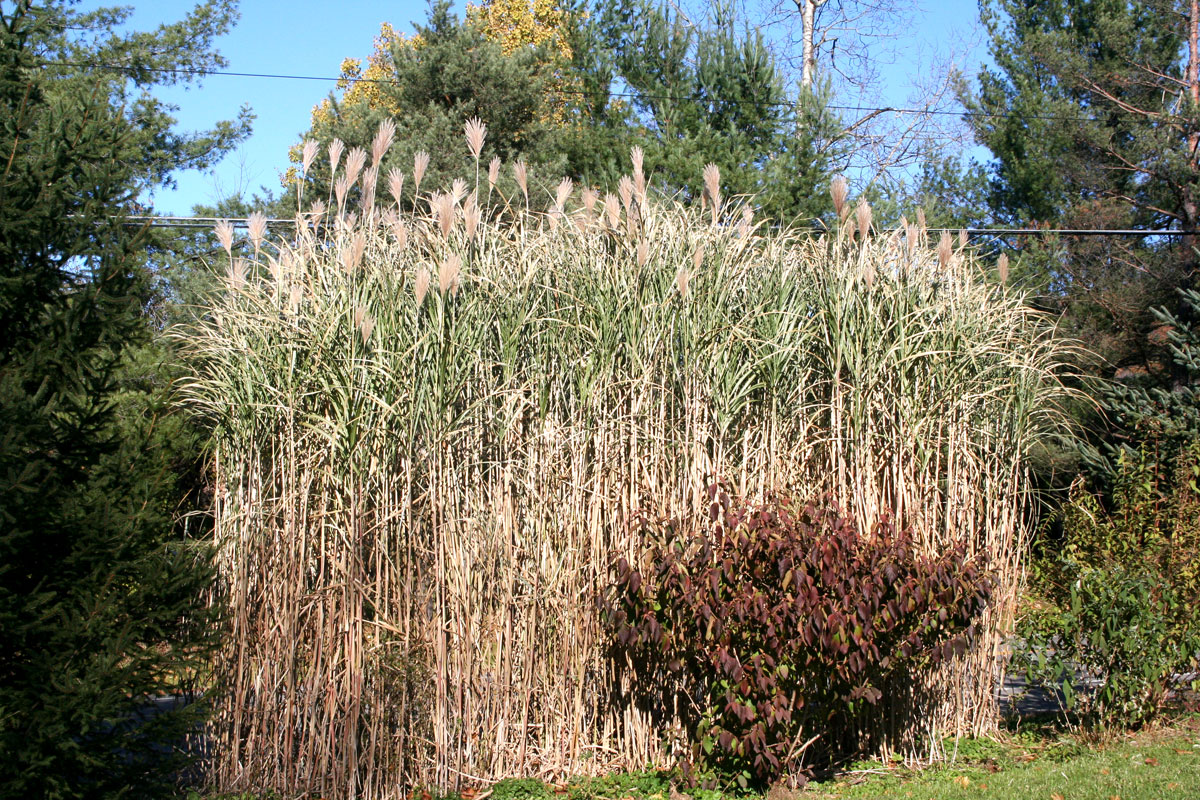
Miscanthus floridulus flowered this year, at least 12 feet tall.

frost on grasses etc.

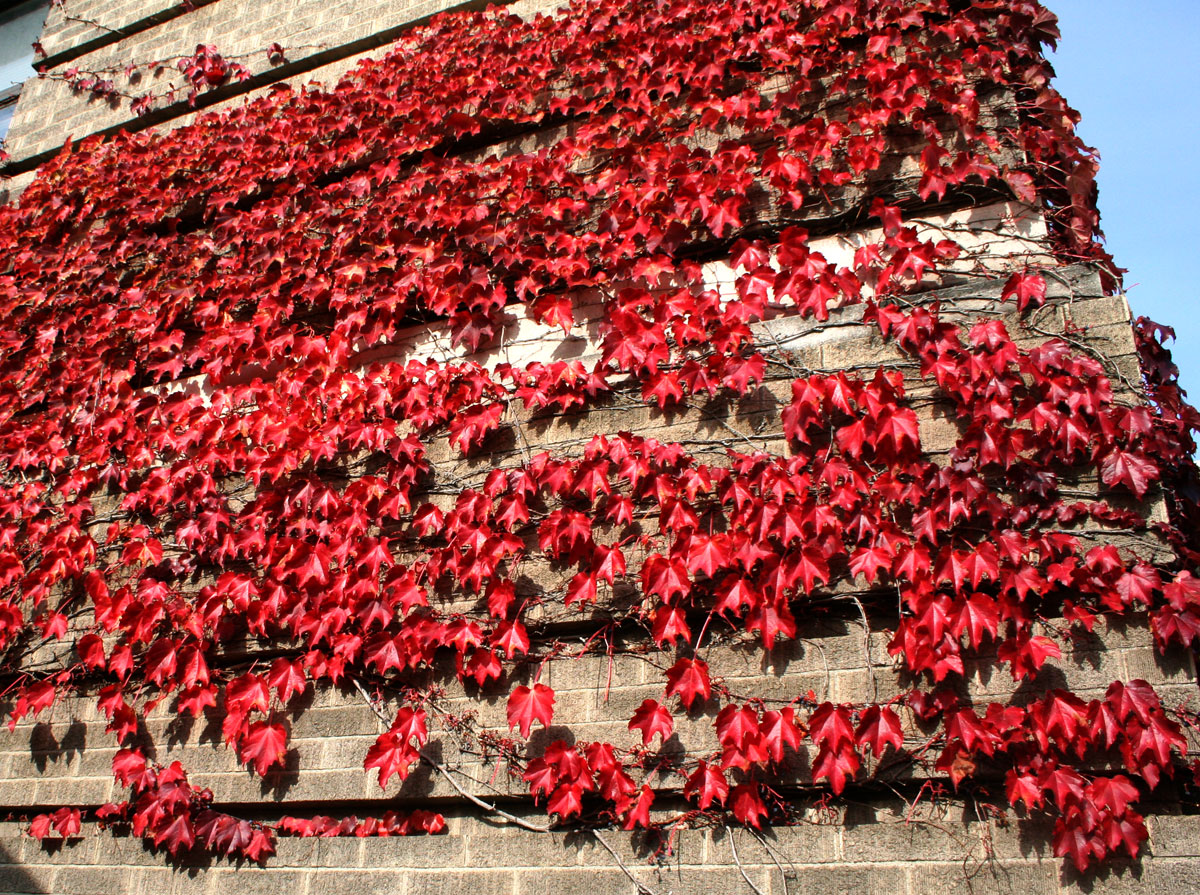
At Cornell, ‘We grow the Ivy.’ It turns red in the fall.

frost on grasses etc.

Scans this weekend, if I can find some time…