NIMG (Not In My Garden)

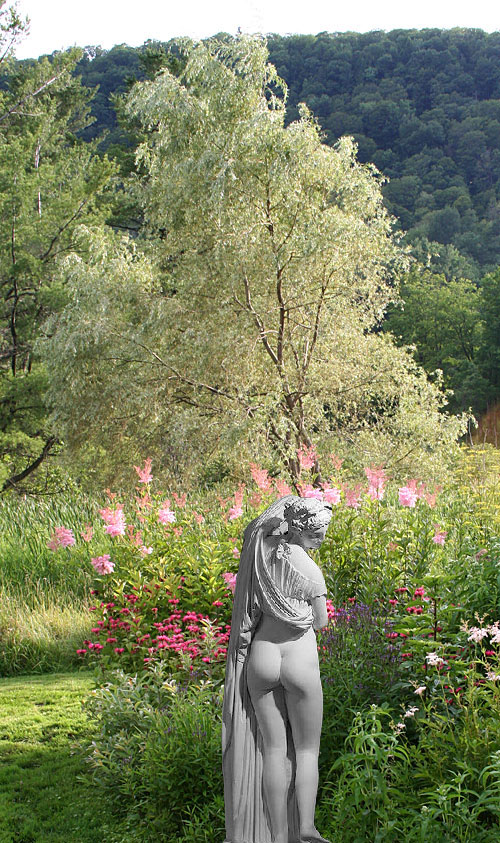
statue in filipendula

Here’s my contribution to blackswampgirl’s (aka Kim) Not In My Garden meme over at A Study in Contrasts. Long-time visitors (both of you) might recognize that the above image is a PhotoShopped combo from two earlier posts, Pink Filipendula and Honey, does this peplos make my butt look fat? The image came to mind as I thought about Kim’s meme. And I realized that I could make it even with my modest imaging skills. Hopefully it will relate to the text.

What you won’t find in my garden:

Formal design. No straight lines here, or proper spacing between plants. I love visiting a great formal garden because I can’t do it myself without a team of OCD hired help. It would drive me mad because I’d notice every plant out of line and every weed between the plants.

tacky statuesReal garden statuary. Not that I don’t like it. Just my taste exceeds my means. I would love to put real, classic garden statuary in wilder spots of the garden. Such ornament would give it that kind of ‘nature taking over’ look. Just can’t afford it. If anyone wants to donate a real Venus Kallipygos or the southeast Asian statues that Nicole shot at Chiang Mai (and more Budha park) or any of the Laotian art she shot, I’ll give them a proper home. You donate, I’ll pay the shipping. Hurry, or I may resort to tacky modern imitations (right).

Stylish garden wear. Sloggers make great hanging planters. But when I garden, I don’t want to look good or worry about getting something dirty or ripped. That includes footwear.

Deer candy. Well actually I’ve got quite a few tulips and hostas. But I either moved them from our old place or came by them for free. With our deer pressure, I won’t spend any more money on ornamentals deer like. The more poisonous the plant, the more I like it.

Weed-free lawn. I would love a putting green or croquet court. I love the look of athletic turf. But don’t have the time or the energy. I’ve invited our turf guy to bring his class to my place to do turf weed identification, because I’ve got them all. I just run the rotary mulch harvester through it every week or so and put a little nitrogen on it most falls.

Enuf for now. I’m sure I’ll think of more this weekend. Stop back.

Update for Kim. Better?

statue_grass.jpg

Print Friendly, PDF & Email

Arborsculpture blog

wilma erlandson

I stop by from time to time to visit Richard Reames’ Arborsmith Studios website because I’m fascinated by the ways that he and others can turn living trees into art. He devotes a page to one arborsculpture pioneer and favorite of mine, Axel Erlandson, and links to other arborsculpture artists around the world.

Erlandson started bending, shaping and grafting trees in the ’20s, and opened his ‘Tree Circus’ attraction in 1947 on the well-traveled route between the Santa Clara Valley and the Pacific coast. That’s his daughter, Wilma, who wrote “My Father Talked to Trees.” Reames sells that book, his own Arborsculpture – Solutions for a Small Planet and other books and supplies at his site.

As I was surfing once again through the links on Reames funky and fun site, I was happy to find that he started new Arborsculpture blog, apparently last winter. Worth adding to your RSS feeds if you are interested in this kind of stuff, and who isn’t?

Here’s a short (3:39) video by Reames:

Print Friendly, PDF & Email

Sod sculpture at Bluegrass Lane

sod sculpture and artistes

Yesterday, students in my friend Marcia Eames-Sheavly’s Art of Horticulture class made a sod scuplture (with help from our ‘Turf Guy’ Frank Rossi) at Cornell’s Bluegrass Lane Turf and Landscape Research Center. Unfortunately, by the time I got my office work under control and headed out to observe, they were done. But teaching assistant and grad student extraordinaire Chad Miller graciously shared his images with me. Here’s a small photo gallery showing the process.

Update: Nice article in the Cornell Chronicle.

Print Friendly, PDF & Email

Ag art of Mann Library

mann friese
Click images for larger view.

Yesterday, for the first time in seven years, the front door through the towering art-deco facade of Cornell University’s Mann Library swung open. A procession of library workers and well-wishers lead by a bagpiper marched in for a ceremonial opening of the newly renovated building.

Since the original building was completed in 1952, Mann has been recognized as one of the great agricultural libraries of the world, unifying the collections scattered around the College of Agriculture and Life Sciences and what was known then as the College of Home Economics (now Human Ecology).

Workers and staff are still putting finishing touches on the interior. For me, the job will not be done until the art work in the original building as I remember it as a grad student (circa 1980) is restored.

My favorite is the Elfriede Abbe frieze (detail above), as described on the Mann Library website:

One of the most remarkable of these pieces in the original building is a 31-foot frieze, designed and carved by renowned artist and sculptor Elfriede Abbe, which was installed on one end of the 2nd floor’s Current Periodicals Reading Room as an anonymous gift to the library in 1956. Human figures on the frieze denote individual disciplines in the study of agriculture and human ecology, and the sculpture as a whole celebrates the scientific and educational contributions these fields make to the quality of life.

Then there are these huge wood inlay pieces:

inlay art inlay art

Also notable are the two gracefully stylized human figures depicted in wooden inlay panels on opposite ends of the 2nd floor card catalog hall. Shortly after the building’s opening the State Architect of the New York commissioned these two figures to evoke the agrarian foundations of the College of Agriculture and Life Sciences. Two members of the State Architect’s office (Frisbie Sanders, designer, and Frances Hector, detailer) used six tropical hardwoods to create the figures.

I have fond memories of wandering the old metal stacks at Mann. I’d start out looking for one thing but then something else more interesting would beckon from a nearby shelf. (I was particularly fond of the older books that opened a window on farming in the old days.) The experience was not unlike surfing the Internet.

While the building houses books, there is a 21st century library spirit that is as much concerned as giving students the tools they need to interact with the information and with each other as it is with housing knowledge. I’m intrigued by one early plan for the renovation that didn’t fly: Digitize all the books and use the entire space to foster human collaboration.

If five or ten years from now that seems like a wise way to go, I think the building will once again gracefully adapt.

Print Friendly, PDF & Email

Floral Mandala #1

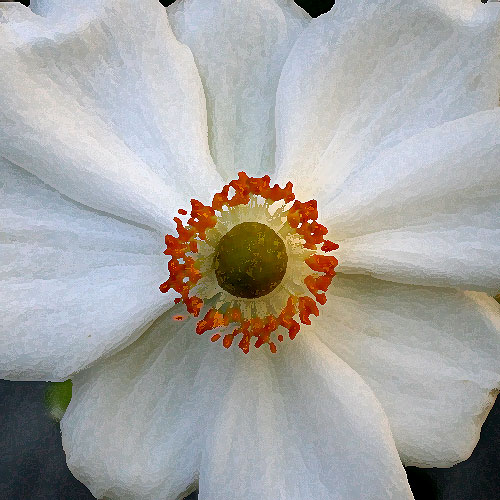
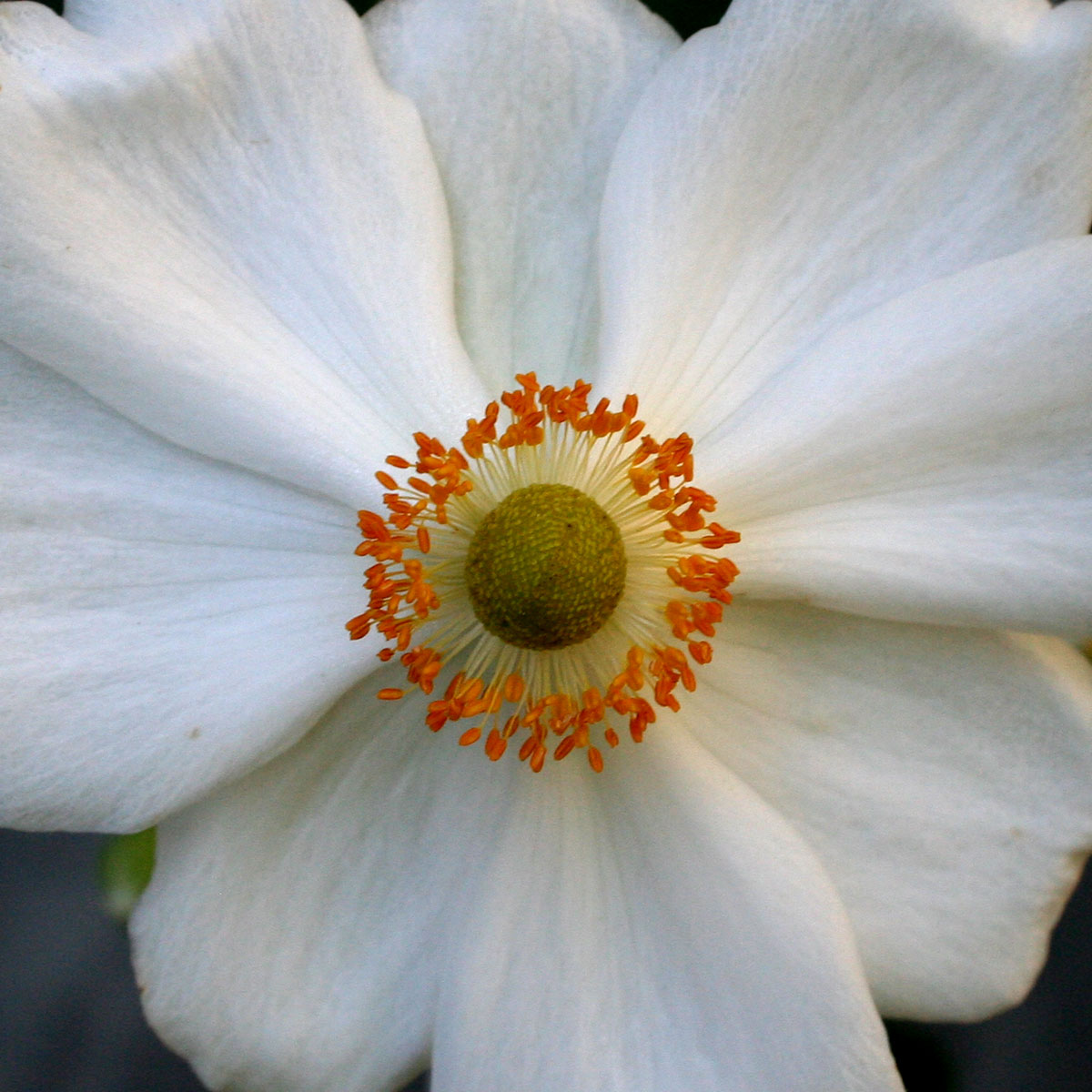
Well it’s no Portia Munson. But I’ve been dying to do one of these ever since I started scanning flowers. The subject (objects?) were all pulled from previous bloom day scans. After fussing to get the individual blooms extracted cleanly, I’m going to have to start planning ahead and scanning some individually.

mandala

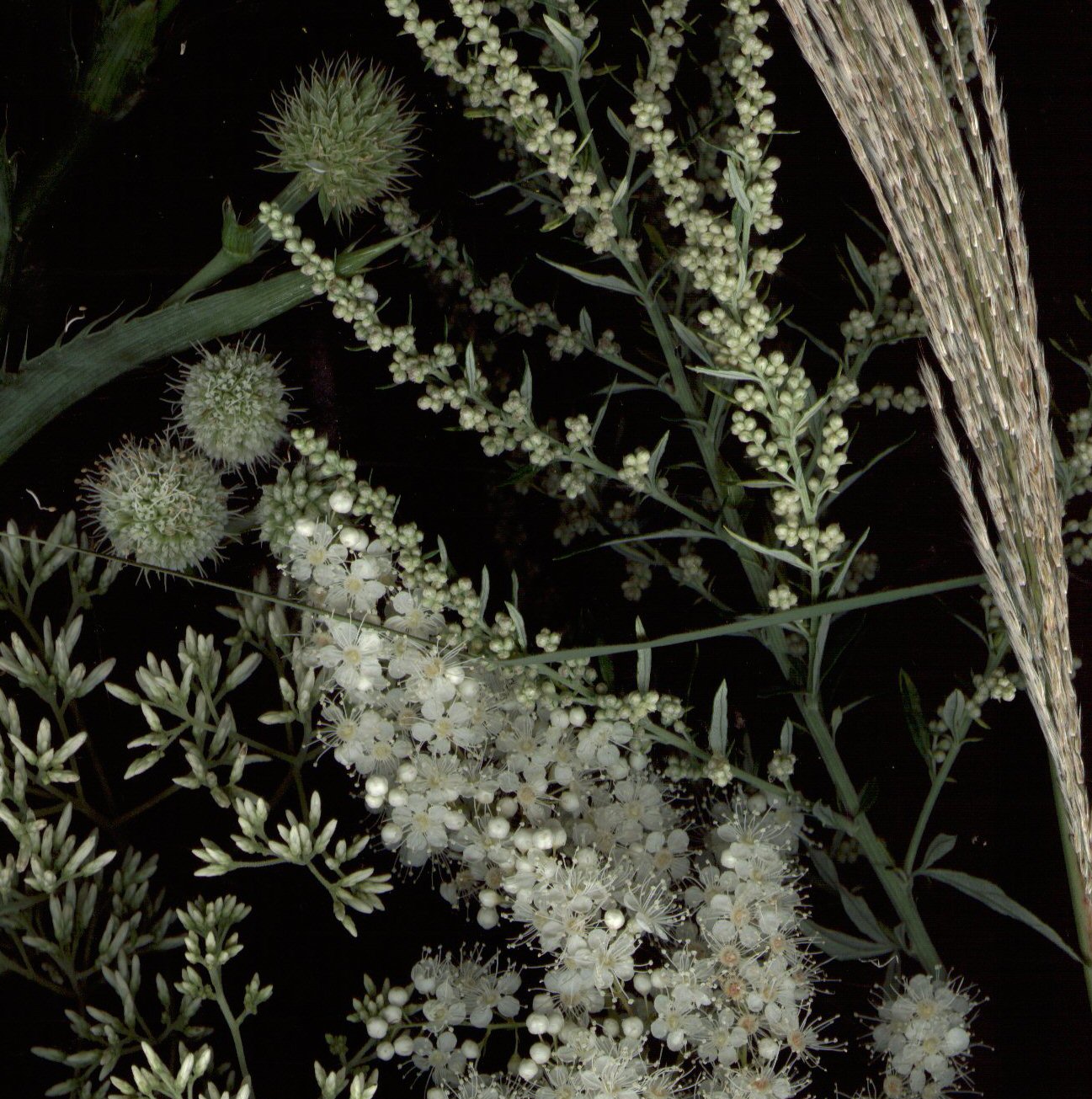
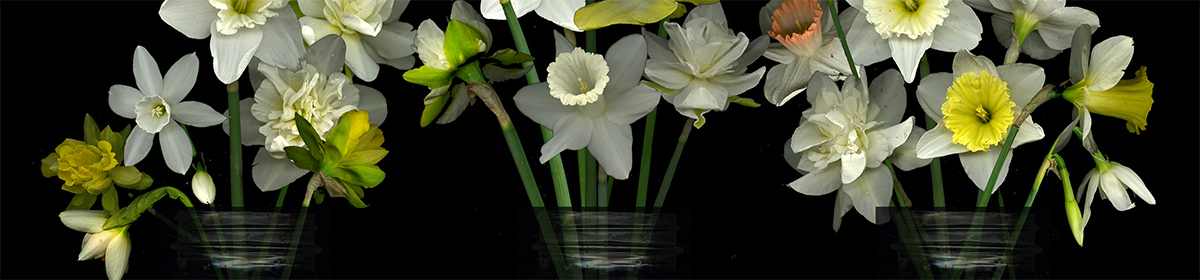
And here’s a quick cutflower ‘scanner test’ I did while installing a new scanner the other day:

mandala

Print Friendly, PDF & Email