‘Terrain art’ by Jay Hart

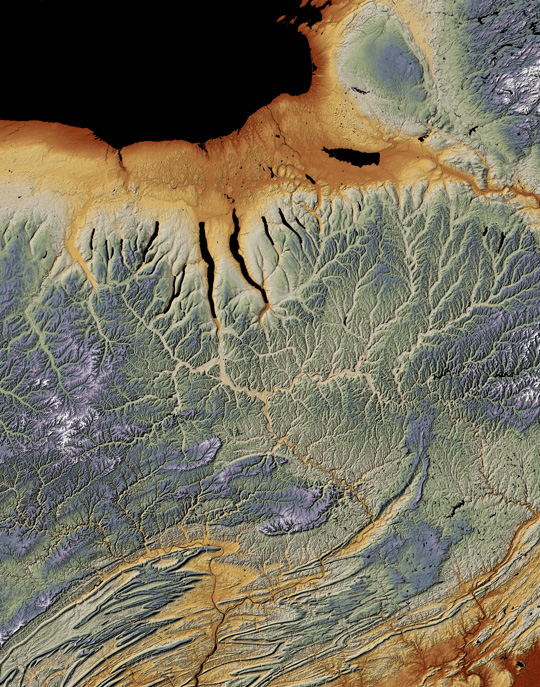
Transitions by Jay Hart
Transitions by Jay Hart, used with permission of the artist.

‘Terrain artist’ Jay Hart, from just up the road in Trumansburg, N.Y., has an exhibition of his large-format prints at Cornell’s Mann Library in November and December. Jay’s art has its roots in his training in plant ecology, remote sensing, and geomorphology and decades of work using aerial photography and satellite imagery to answer scientific questions.

Apparently the beauty of this planet wasn’t lost on him either.

Across five continents my mapping experiences gave me a strong curiosity for terrain processes and for the aesthetics of landform. In recent years I have been exploring as art the countless examples of the earth’s broadscale beauty.

Visit Jay’s online gallery. Each image is fascinating in its own way. And every picture tells a story. For now, Transitions is my favorite, because it’s from my neck of the woods and I know the story.

I’ve only viewed Jay’s work online. But you can bet I’m going to see them in person because I suspect that their impact is even more dramatic in the flesh.

Update: If you like these, Pam at Tales from the Microbial Laboratory recommends the batiks of various aerial/satellite images (mostly coastlines) by Mary Edna Fraser. Visit Mary Edna’s Islands from the Sky website.

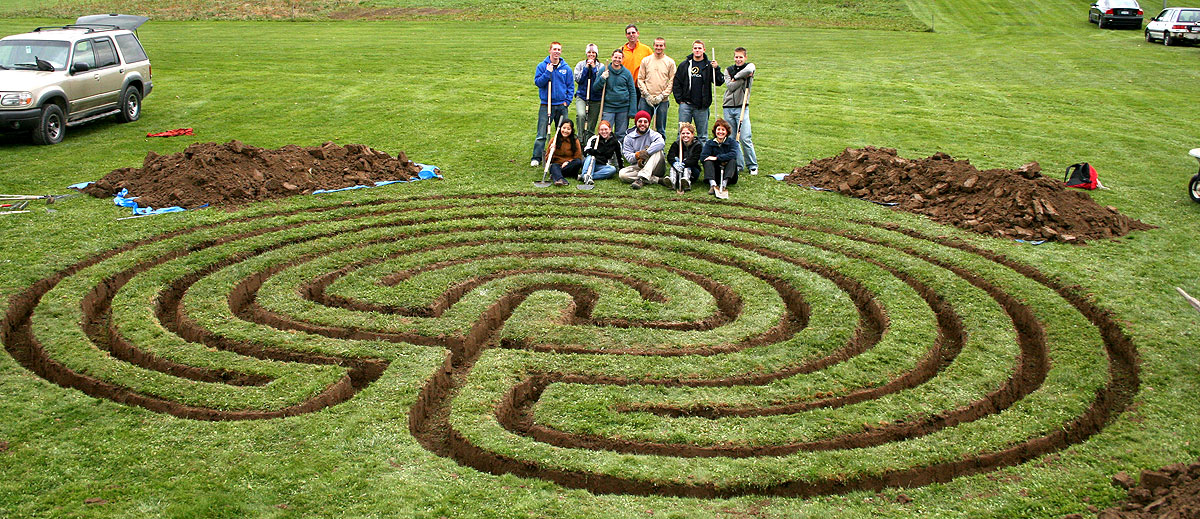
Bulb labyrinth

labyrinth ditched out

This afternoon, I helped Cornell bulb expert Bill Miller and his class prepare a bulb labyrinth for planting at the Bluegrass Lane Research Center. Center manager Ron White ran a sod stripper over the pattern Bill laid out yesterday. And today the students excavated the trench where the bulbs — daffodils, tulips and muscari — will be planted next week.

Unlike a maze, a labyrinth has a single convoluted path to the center. Go ahead. Trace it with your finger following the grass path that will be defined by the bulb planting. (Much easier with the larger image.) It’s an ancient, contemplative tradition. Read much more about it at the Labyrinthos website.

Update [11/13/2007]: Nice coverage of the project in the Cornell Chronicle: Student-created labyrinth plants the way for a perennial path to peace.

Garden bloggers bloom day – October scans

Things are winding down, what with a light frost Saturday morning. This month’s scans aren’t so crowded.

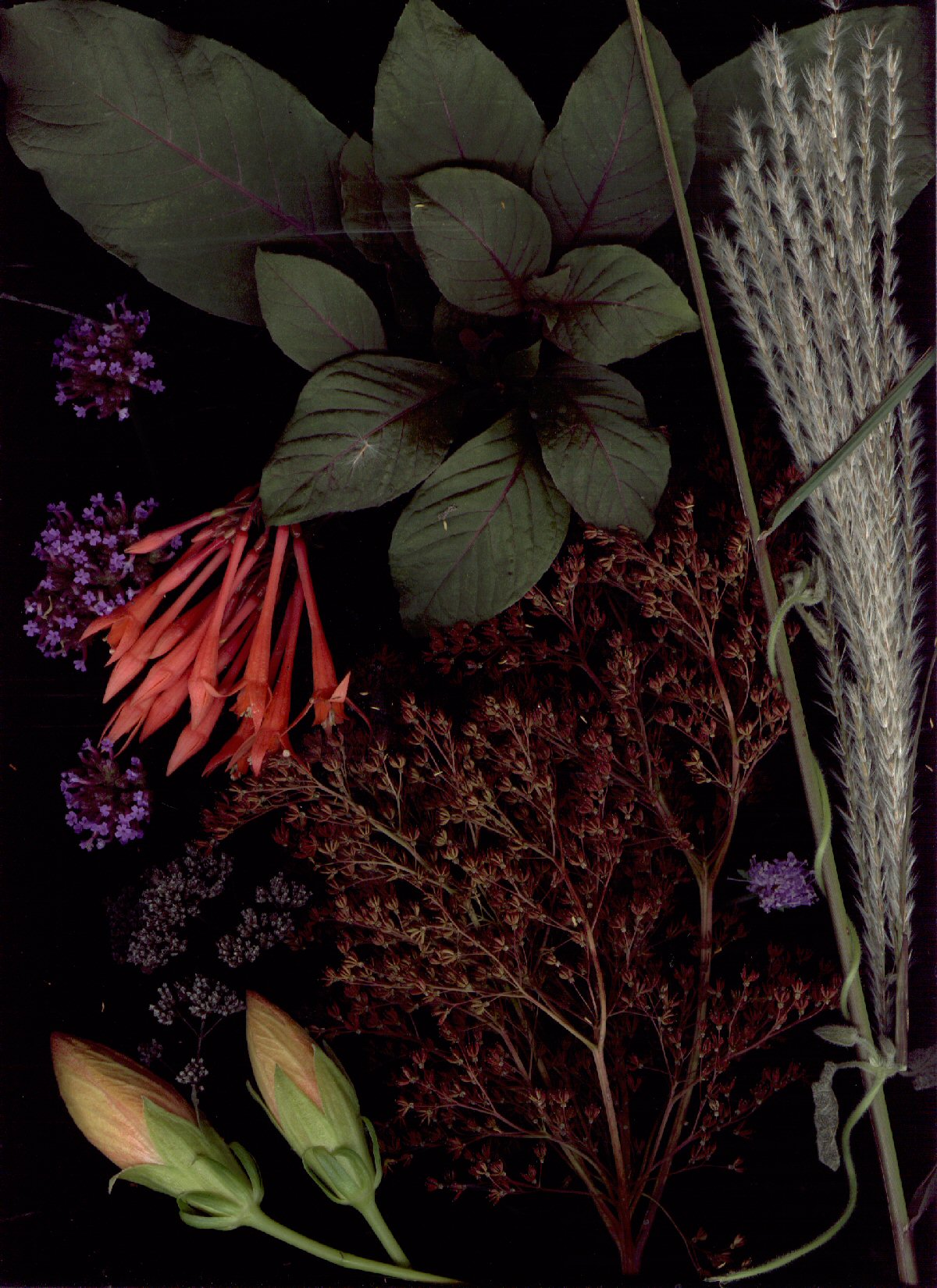
Fuschia (it was close to the house and not damaged), Verbena bonariensis, oregano, hibiscus buds, filipendula, thungergia stem snaking up an ornamental grass stem.

oct scan

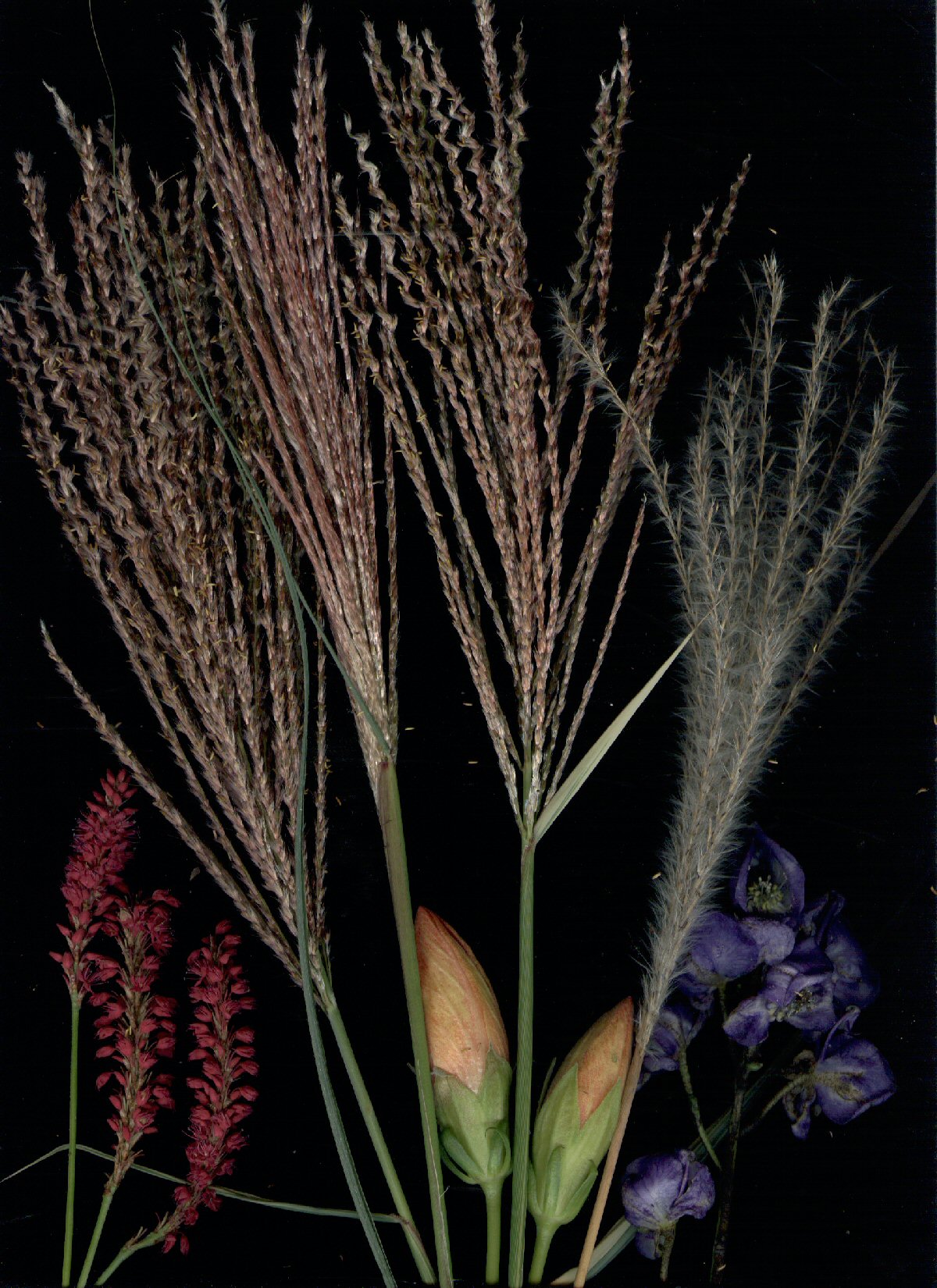
Polygonum ‘Firetail’, hibsicus buds, Aconitum, ornamental grasses.

oct scan

The Dalai Lama in Ithaca

dalai lama at Johnson MuseumThe Dalai Lama is in town to dedicate a new monastery here in Ithaca, and spent most of the day on the Cornell campus. He stopped by the Johnson Art Museum to bless both a sand and a string mandala that monks from India have been working on since September 11. It’s been an experience to see them the past few weeks strolling across campus in their robes in the warm fall weather on their way to Collegetown for their lunch break.

The Ithaca Journal has some great photo essays of the monks at work constructing the string mandala and sand mandala.

The Cornell Chronicle also has great coverage of the visit, and the web folks have streaming video of the Dalai Lama’s address to a full house at Barton Hall. It’s worth a peak just for the invocation chant by the monks. I only caught bits and pieces this afternoon. But from what I could hear, the Dalai Lama is entertaining (jovial is the word that came to mind) as well as enlightening.

monk working on madala