Blog

Plant thieves

Saruma henryiAs if keeping the deer at bay weren’t hard enough, this year two-legged plant thieves are particularly plaguing Cornell Plantations, the botanical gardens, arboretum and natural areas at Cornell University).

Last December, I posted about how Plantations staff spray trees with ‘ugly mix’ to prevent rustlers from cutting evergreens for Christmas trees. But that’s not really an option for the many rare, unusual and valuable plants being carted off — some in broad daylight — during the growing season. According to the Cornell Chronicle:

High-value thefts include a rare, slow-growing, potted specimen-sized Agave and a heavy, glazed container filled with colorful annuals and perennials that was stolen right in front of the Plantations administration building. In perhaps the most brazen theft, the herb garden manager was laying out perennials in peat pots throughout the garden in preparation for planting. She took a short break, only to return to find that many of the plants had been stolen. Most recently, a collection of unusual heirloom vegetable plants were taken from their cold frames located outside the Plantations’ vegetable garden.

Missing plants include:

* Lysichiton camtschatense (Asian skunk cabbage),
* Glaucidium palmatum
* Epimediums (Bishop’s cap)
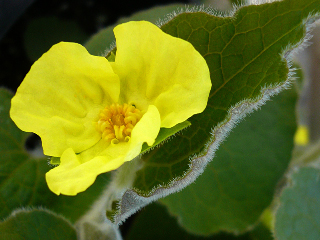
* Saruma henryi, an Asian woodlander (image above right)

Heirloom tomato varieties:

* Aunt Ruby’s German Green
* Big Rainbow
* Black from Tula
* Cream Sausage
* Giant Oxheart
* Hillbilly Potato Leaf
* Plum Lemon
* Orange-fleshed Smudge, and
* Wapsipinicon Peach

If these have mysteriously shown up in any of your neighbors’ gardens, contact the Cornell Police at 607-255-1111.

WHCU interviews Cornell Plantations director Don Rakow on the plant thefts.

Radioactive waste in the garden

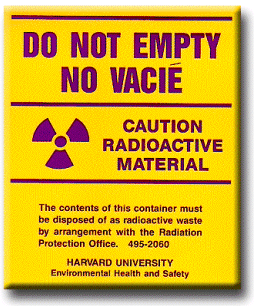
radioactive wastesignNo, I’m not talking about that little kerfuffle with Kerr-McGee back in the ’80s.

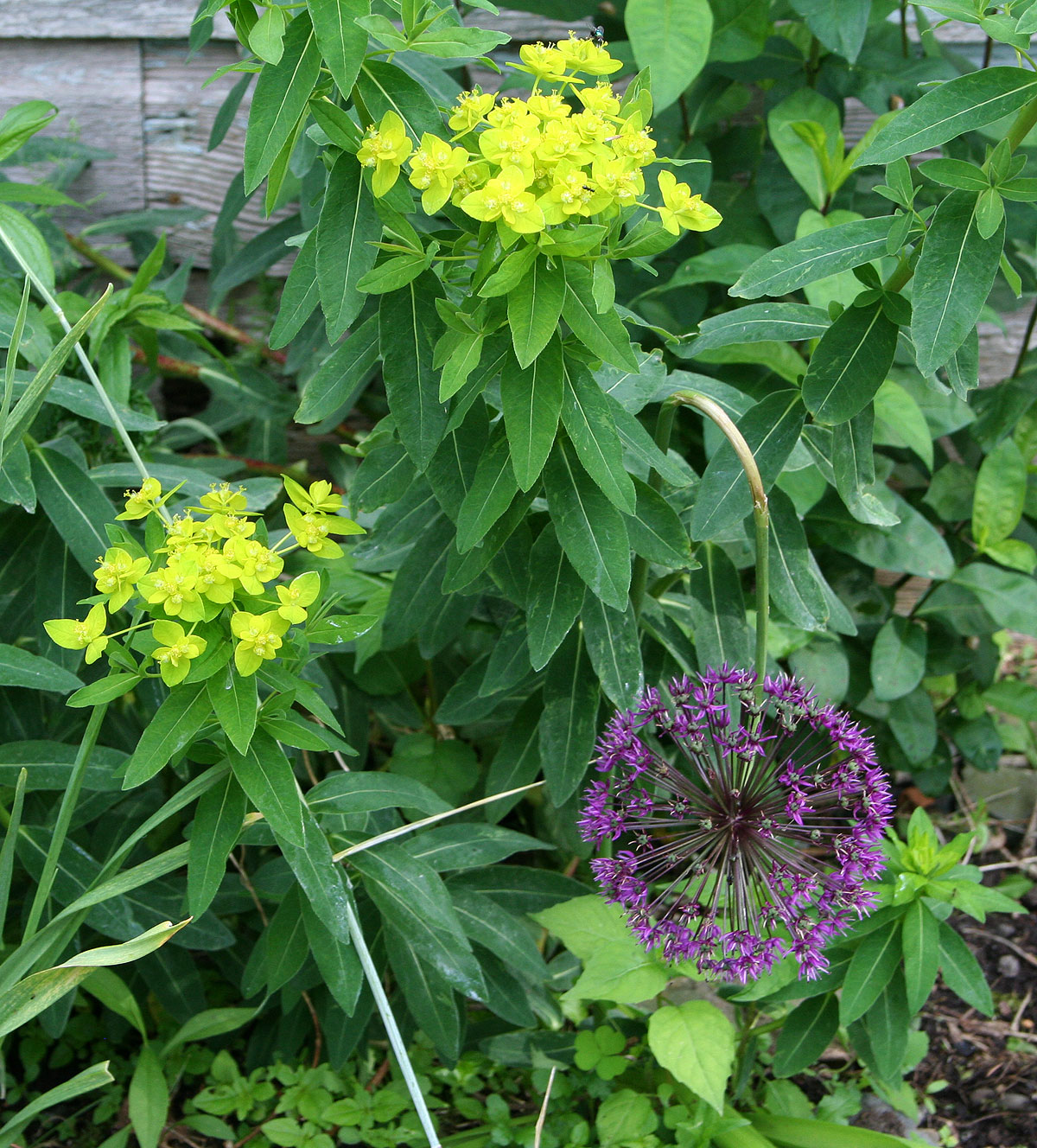
There’s areason that radioactive waste signs are purple and yellow. Purple and yellow are complementary colors — colors on opposite sides of the color wheel — like red and green or orange and blue.

They compete for the attention of the eye, and so accentuate each other when located close together.  On radioactive waste signs, they screem for attention.

If I were a better designer, I’d take advantage of that. But I do notice when it occurs by happenstance.

Euphorbia and allium…

purple and yellow and more

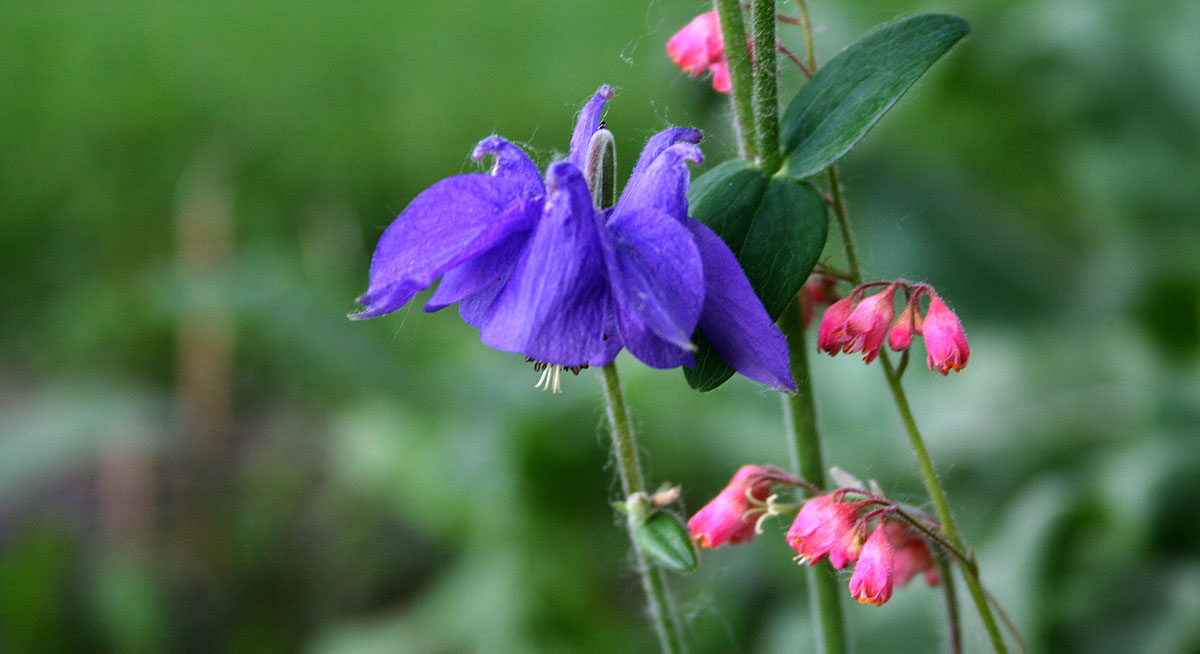
Purple (columbine) and orange (coral bells) have similar effect, though they aren’t exactly opposites on the color wheel.

purple and yellow and more

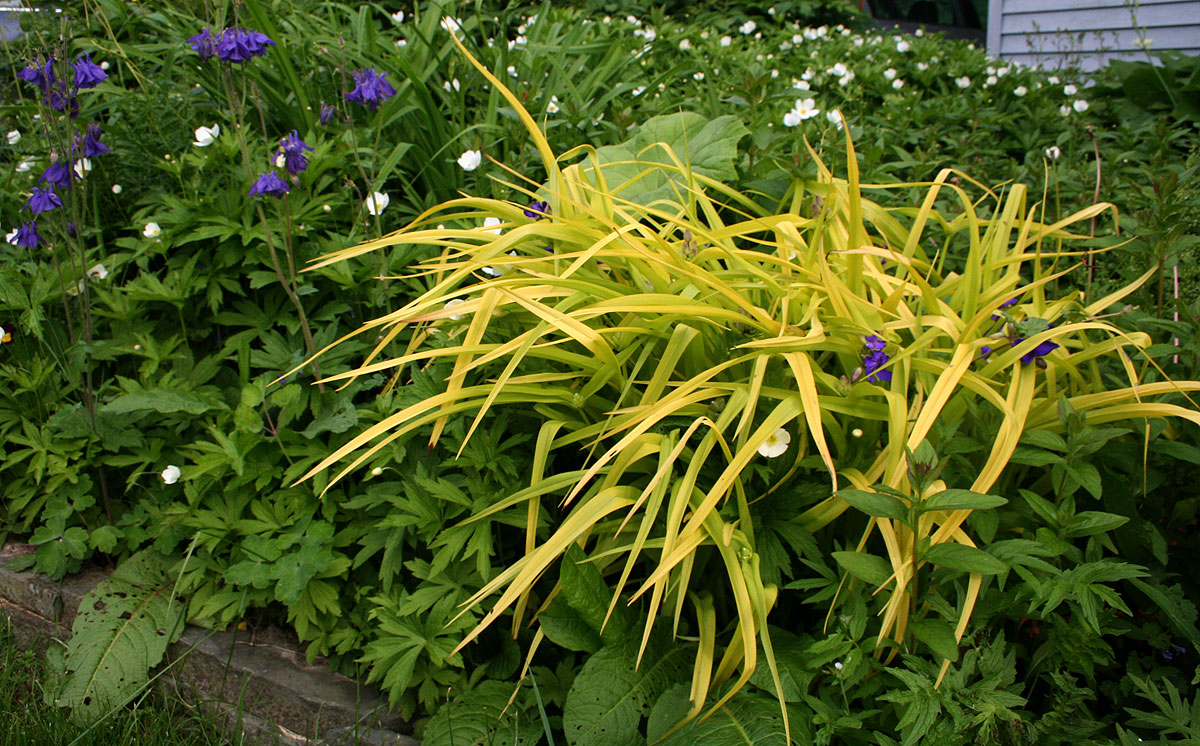
Tradescantia with its own purple flowers and some columbine nearby …

purple and yellow and more

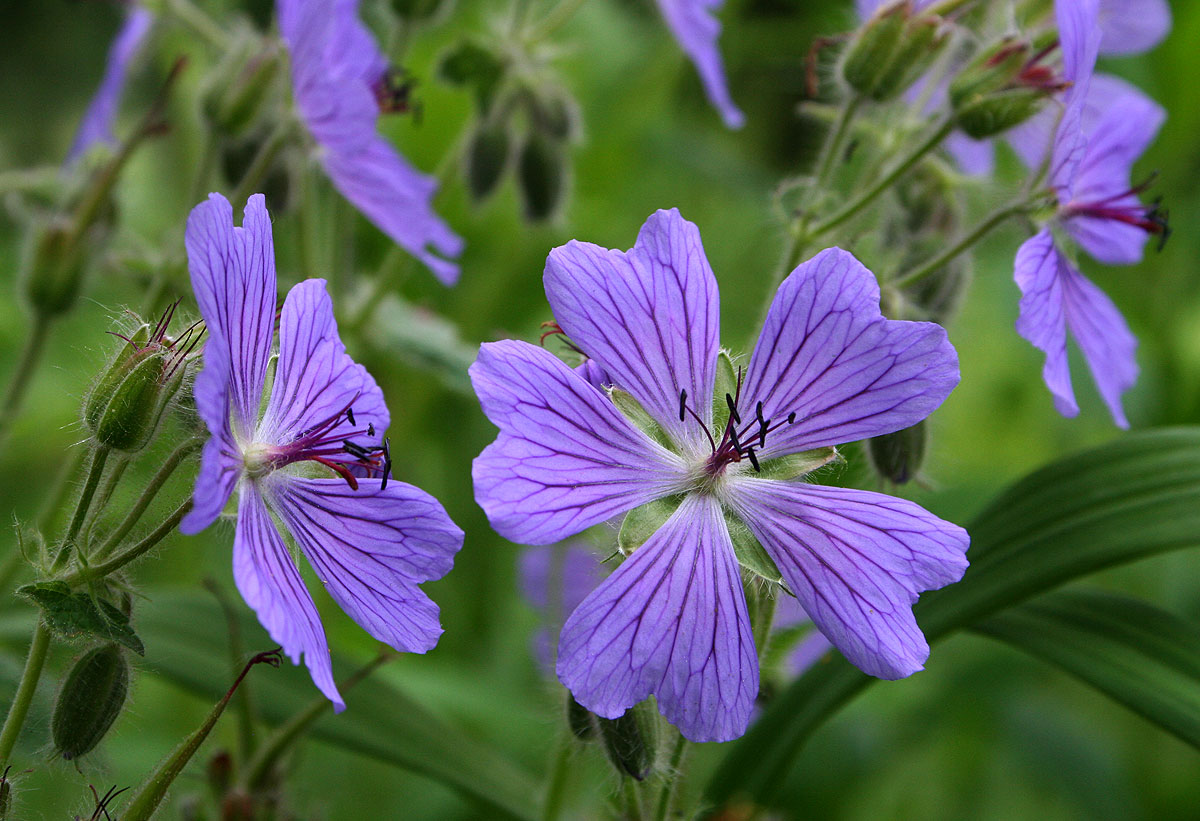
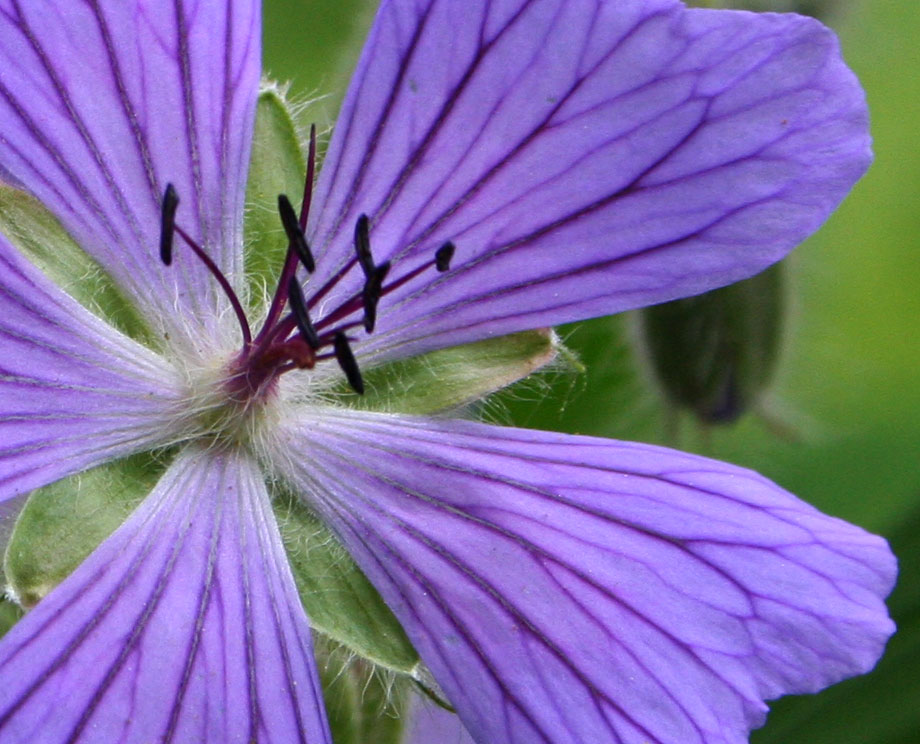
More purples that I should team up with some yellows. Geranium … [Update: That’s Geranium renardii “Nätnäva”, judging by pix from Ken in Sweden.]

purple and yellow and more

Closer …

purple and yellow and more

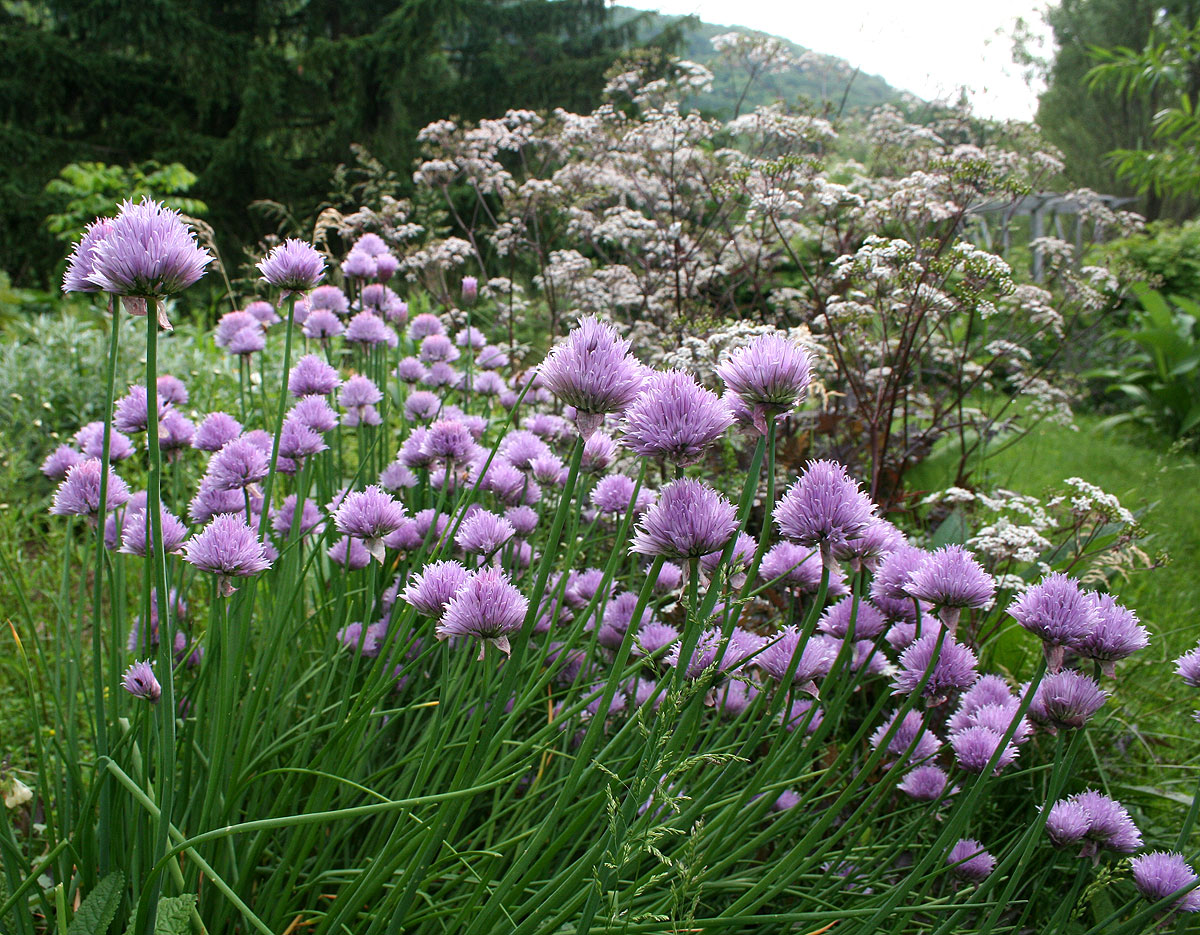
Chives and cow parsnip.

purple and yellow and more

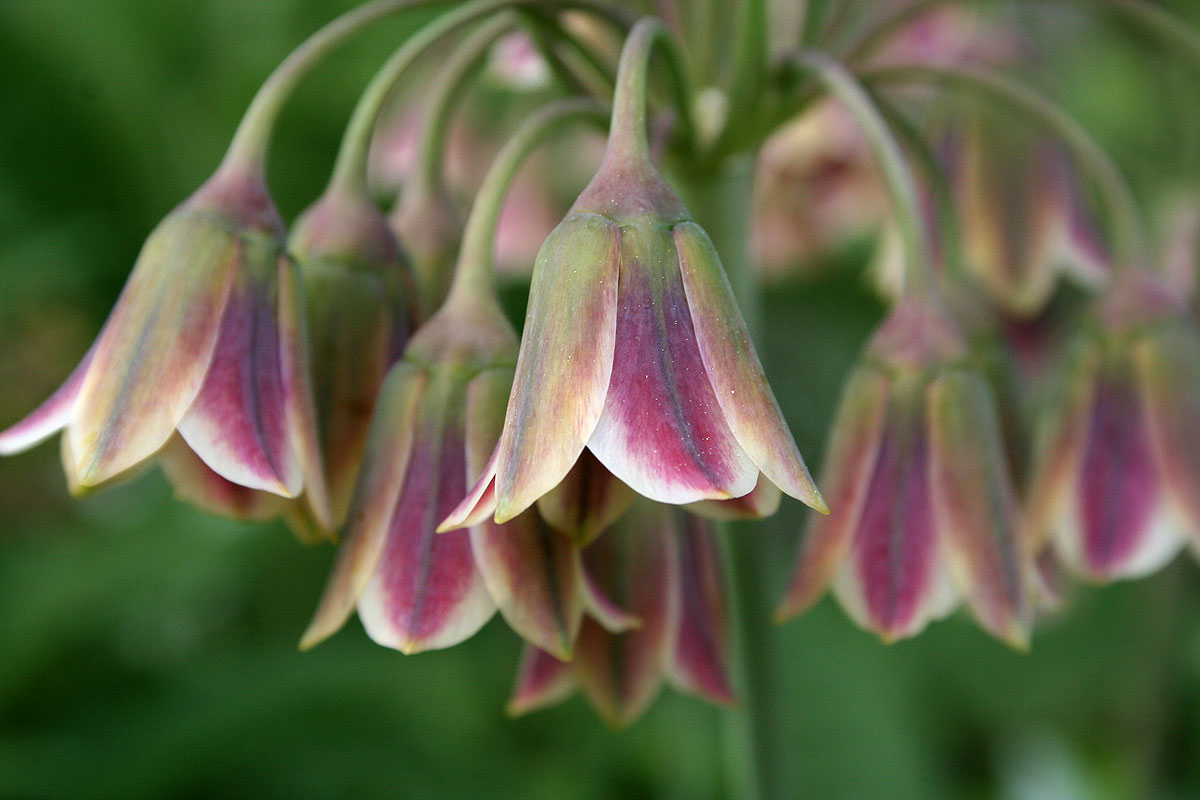
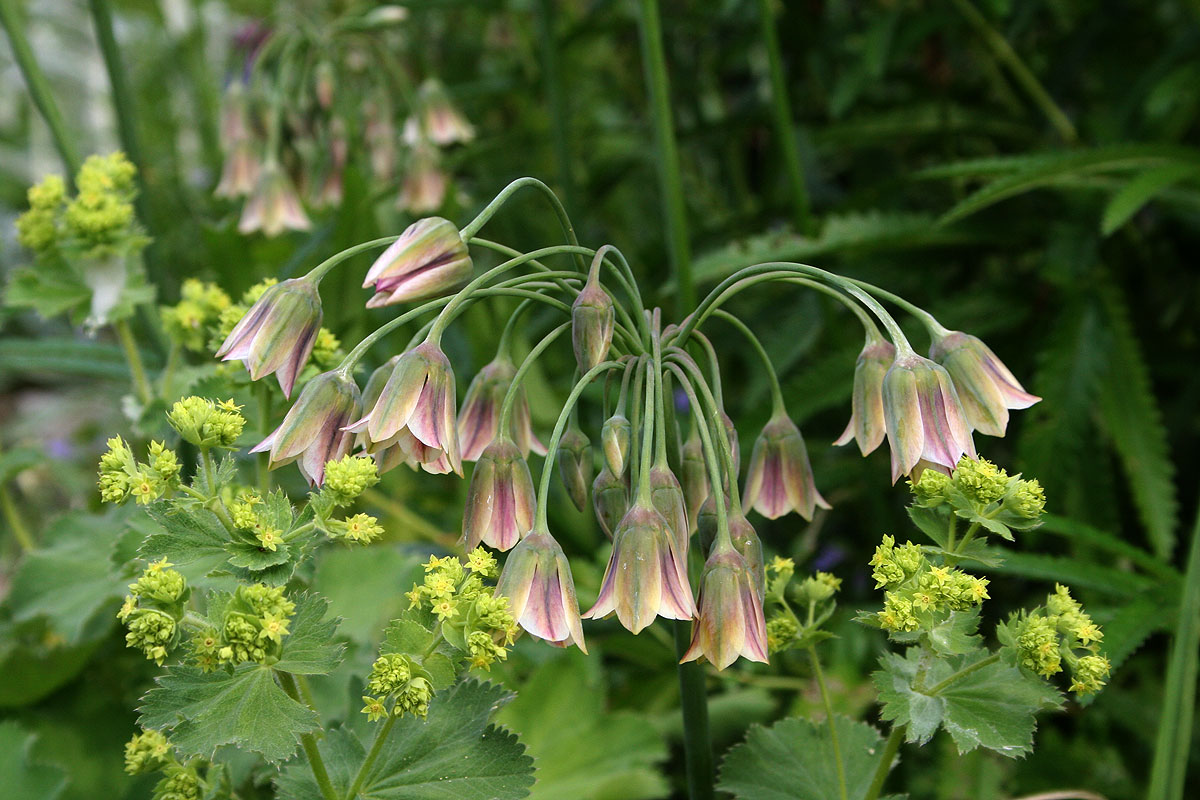
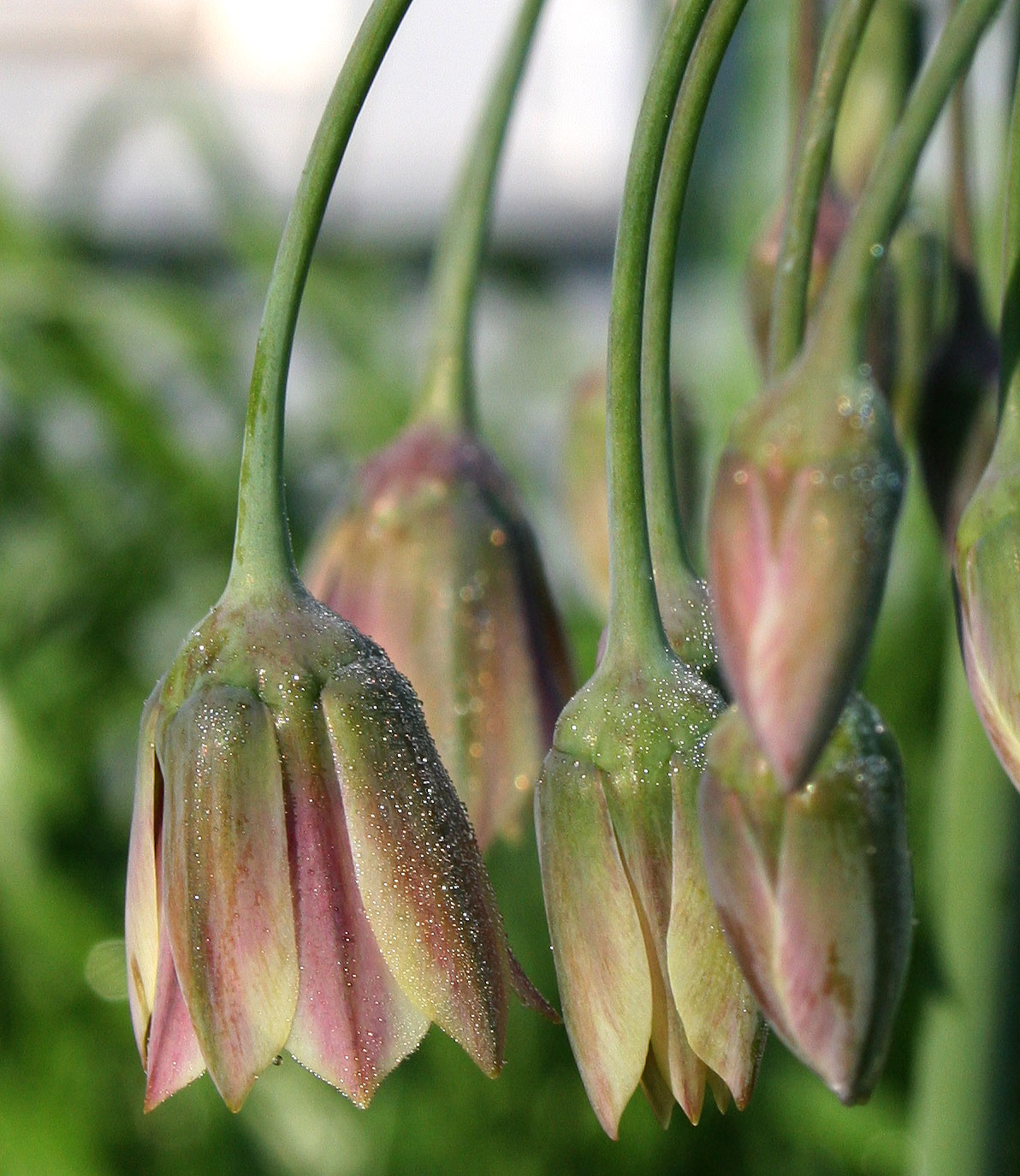
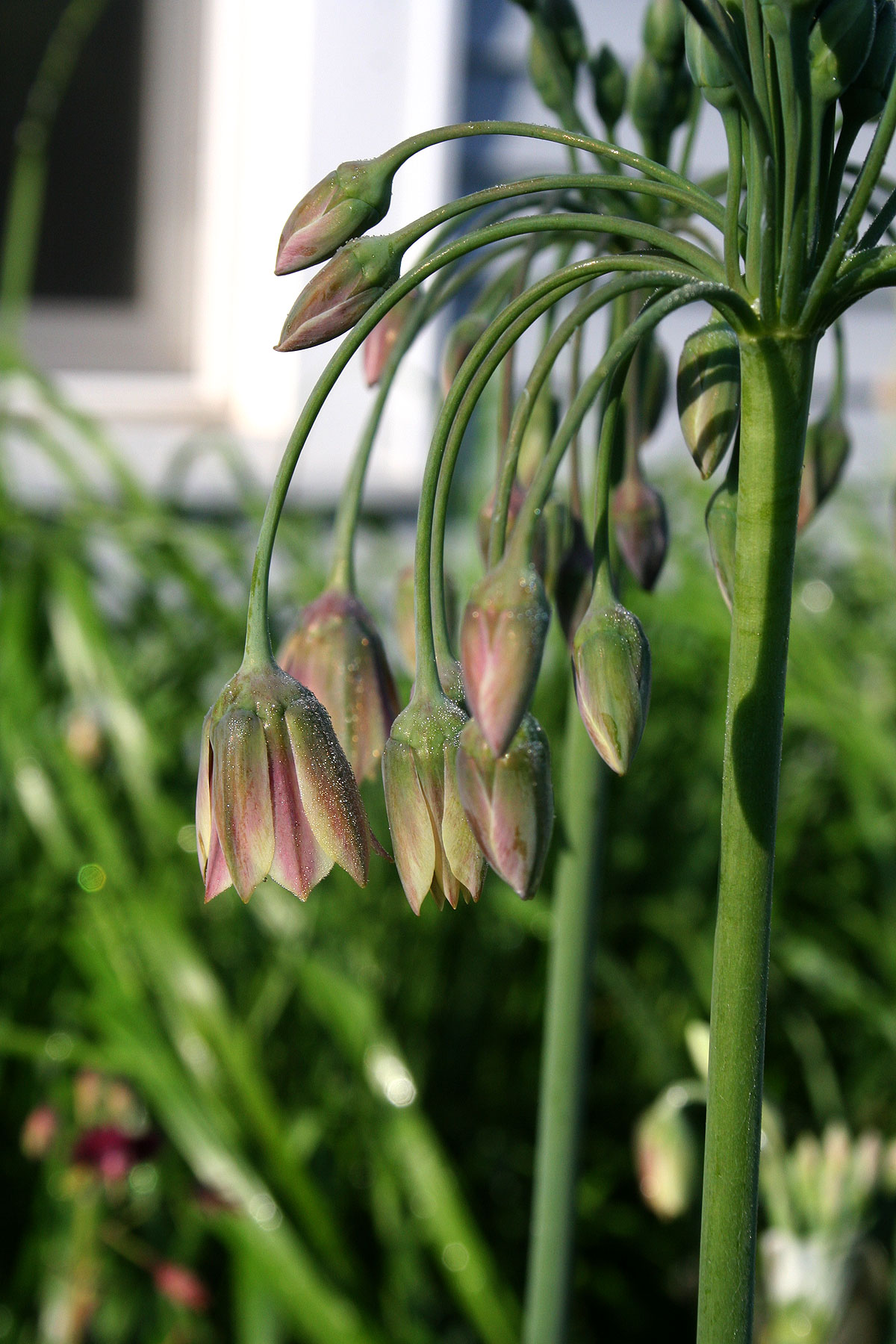
Nectaroscordum siculum ssp. bulgaricum

As a kid, I used to take chunks of all four glow-in-the-dark colors of Play-Doh and work them in to one lump. I’d keep kneading that lump until the colors formed psychedelic patterns. My very own hunk of Peter Max. But if you worked that hunk too much, the colors all blended together to dull gray.

Nectaroscordum siculum ssp. bulgaricum

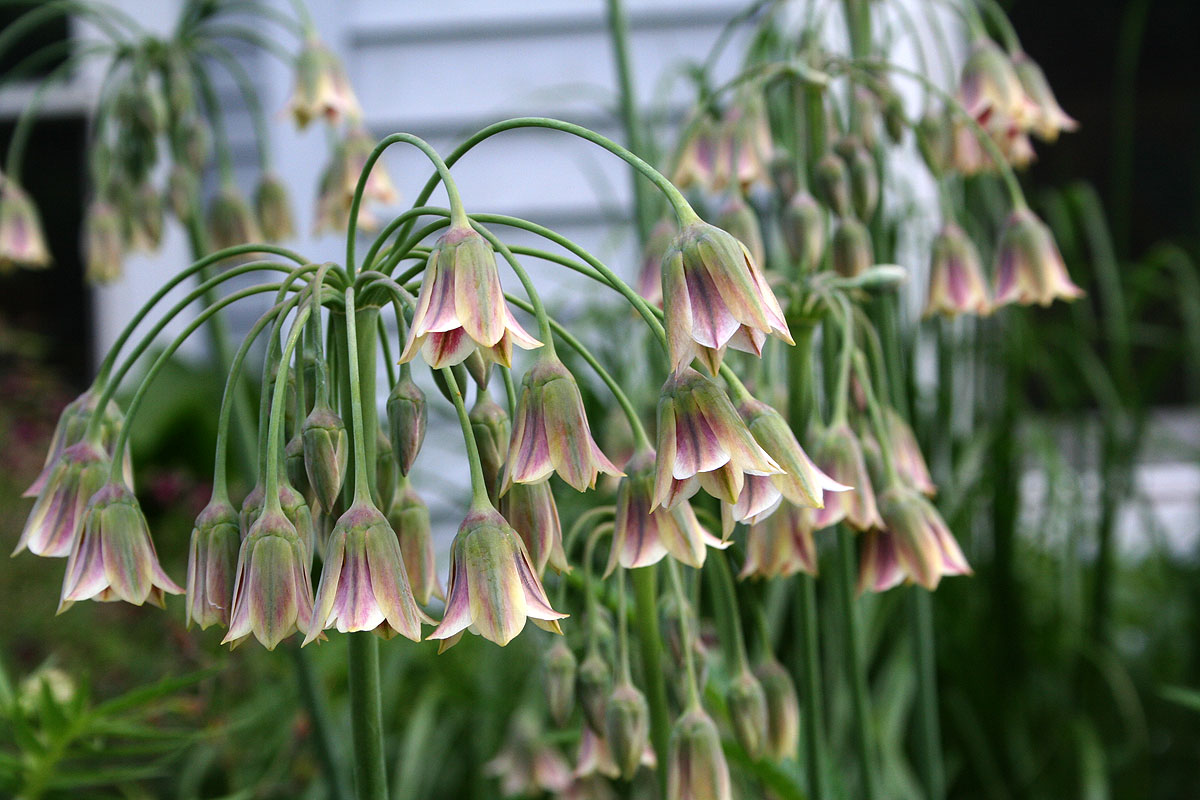
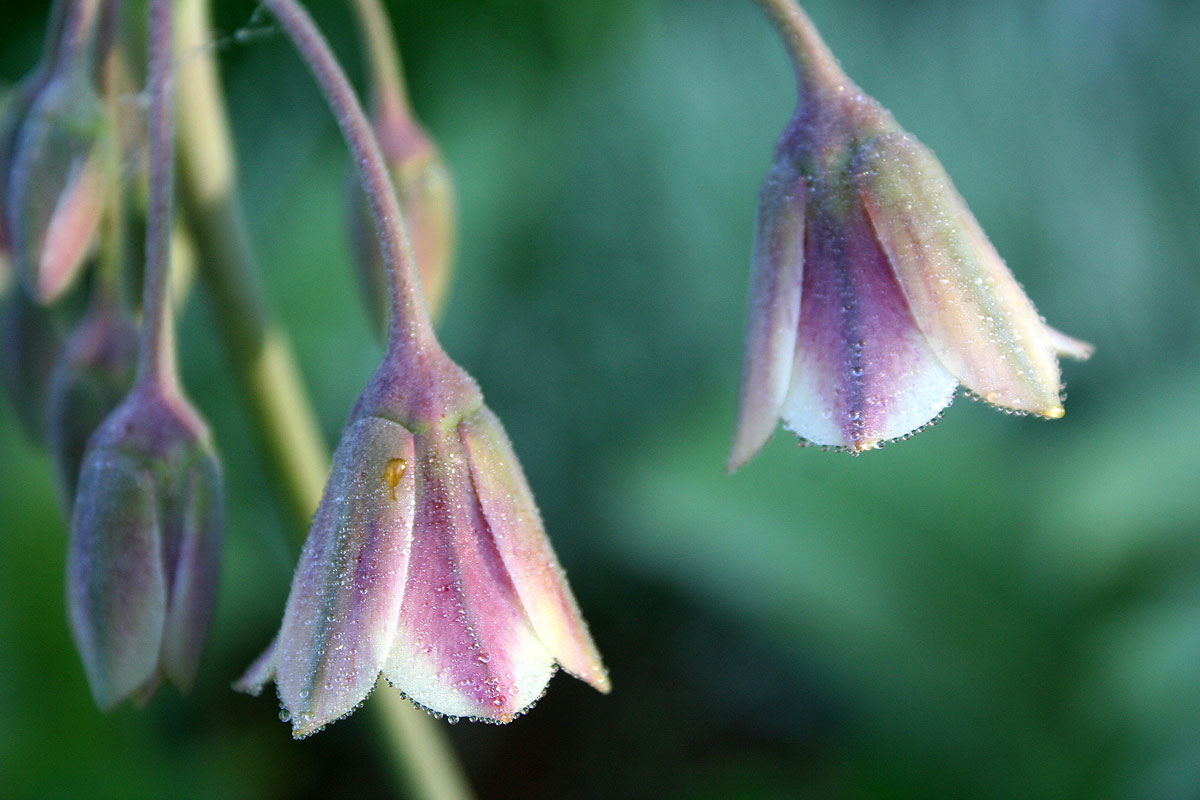
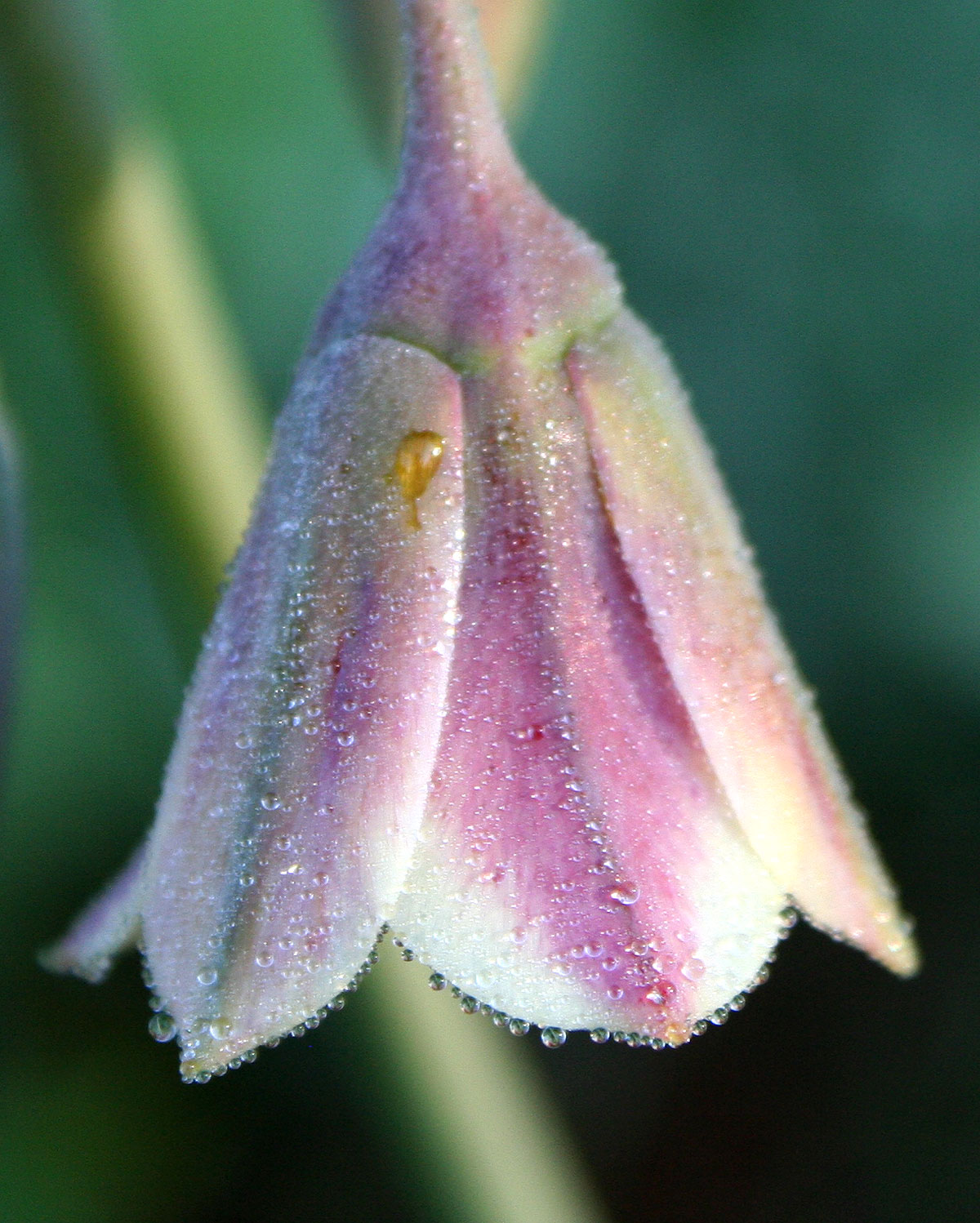
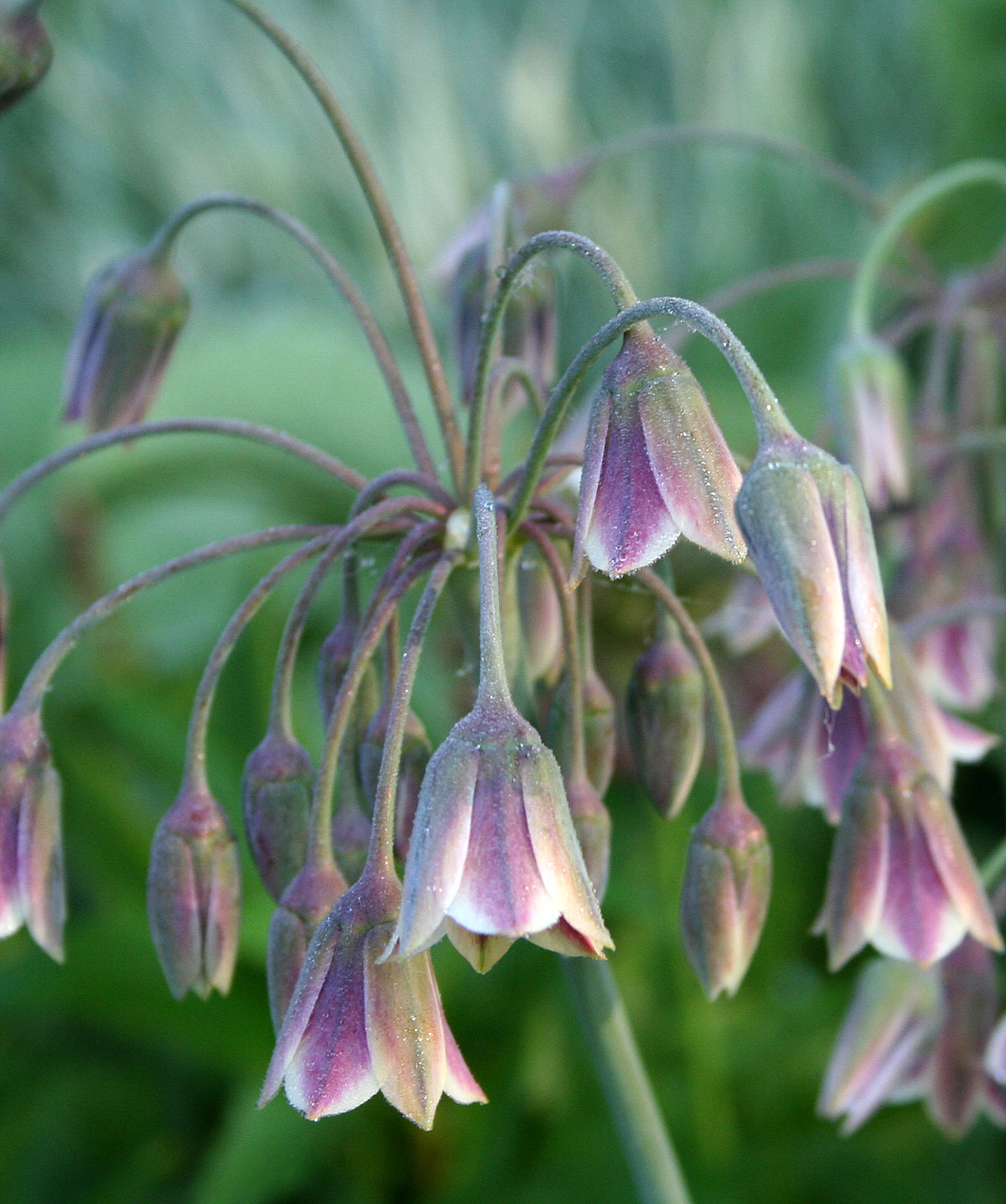
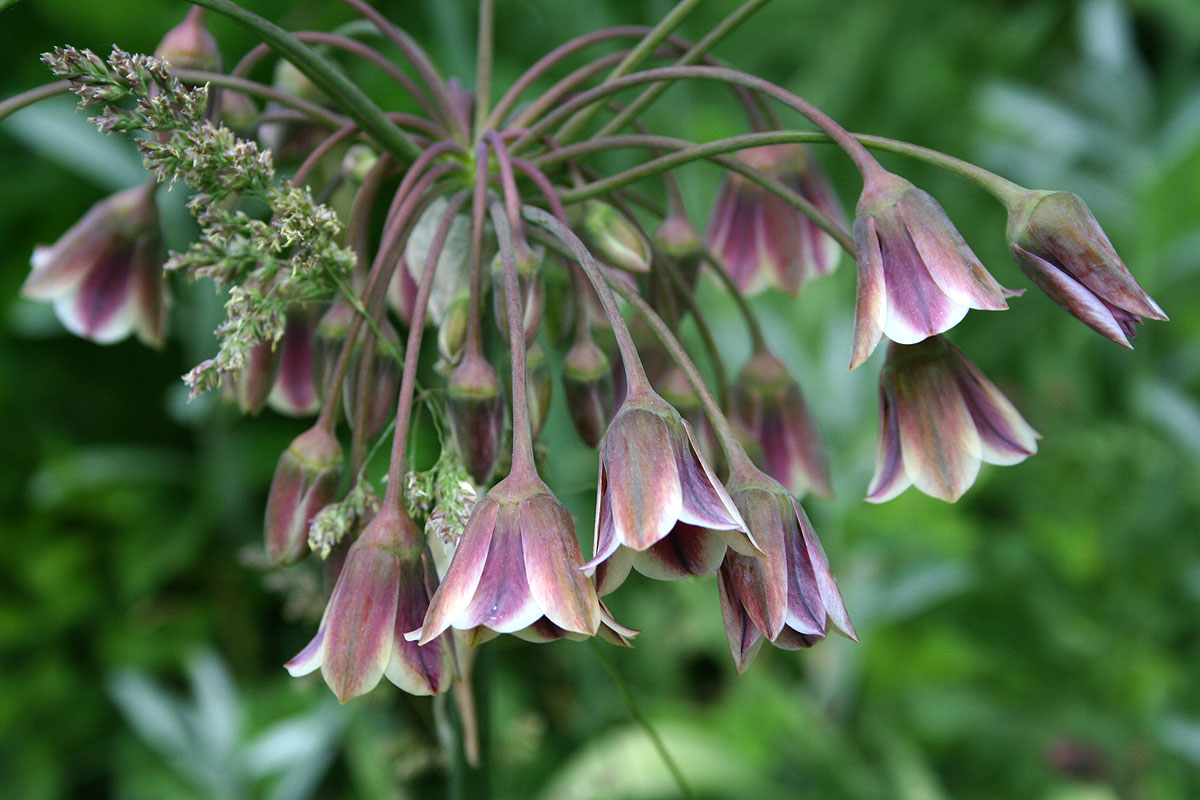
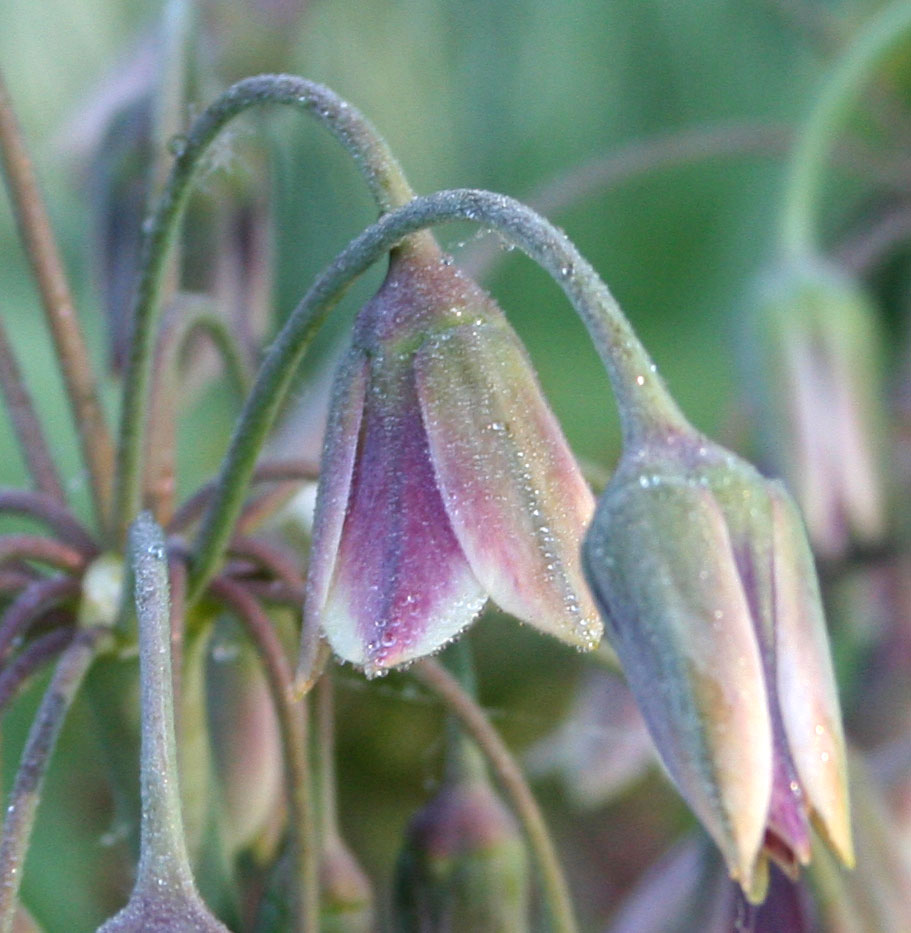
What’s that got to do with Nectaroscordum siculum ssp. bulgaricum, my favorite flower this time of the year? From a distance, it’s pretty homely. All the subtle colors blend together and the eye turns them to a barely noticeable grayish green. But if you get up close, it’s a mixed sherbet delight. The colors also change dramatically depending on the light.

The structure is a bonus — interesting enough to inspire this sculpture from some pictures I took I took last year.

More Nectaroscordum siculum ssp. bulgaricum than you probably want to see. But hey. It’s a favorite…

Nectaroscordum siculum ssp. bulgaricum

Nectaroscordum siculum ssp. bulgaricum

Nectaroscordum siculum ssp. bulgaricum

Nectaroscordum siculum ssp. bulgaricum

Nectaroscordum siculum ssp. bulgaricum

Nectaroscordum siculum ssp. bulgaricum