 Much discussion of sex and antiquities over at GardenRant this week.
Hank comments “Everything is sex. Either overt or covert. All sex. All the time.” (What, you can’t liveblog from Sweden Hank? They have ‘the internets’ over there I think. Or did you run into the Swedish Bikini Team?)
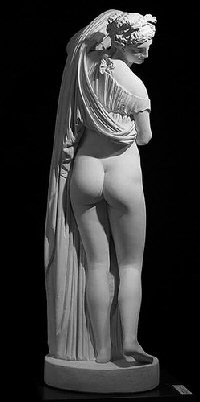
If I could afford it, I would buy classic statuary for my (less than formal) garden. But when I see Venus Kallipygos, I don’t feel a connection with the ancients based on sex. All I can hear is the most feared question a man is ever asked:
Honey, does this peplos make my butt look fat?
You can buy classic statues if you’ve got the bucks. (Page down. I have no clue why the golfer sorts to the top of that gallery. Ironic.) No thanks. I’m stuck with a pink flamingo (the kind with the spinning wings) and a bowling ball on a piece of rebar.
 I was searching for some images of the tacky modern nude garden statue crap that I remember gracing ads in gardening mags. You know the ones — a hybrid of Hustler and Gary Lee Price. Instead, I ran into this USAToday article Garden Center covers nude statues with velvet sarong.
Ummmm… Leave it to a Bible Belt nursery to make classic statues even more erotic in a tacky twins-in-bondage sort of way. (Yes. Sales increased and customers were caught peaking peeking.) Reminds me of John Ashcroft screening Lady Liberty.
In a perfect world, I’d have sculpture in my garden like what Nicole posted about in More Buddha Park. (She’s got another great slideshow of Asian garden sculpture and much more worth exploring over at her blog, A Carribean Garden.)
Lots more to blog about and lots of pent up pix to purge. But I’ve got to go make hay while the sun shines — or at least it’s not raining.
Update: Keeping with the classical them, Bill Kirchen (formerly of Commander Cody) is coming to town. His latest is ‘Hammer of the Honky Tonk Gods’ — a tribute to a Fender or one of those other classic guitars. I’m clueless, but I get his point:
It was born at the junction
Or form and function
It’s the hammer of the honky tonk gods.

 Intriguing article in today’s Washington Post,