Blog

Cuisse de Nymphe

cuisse de nymphe

I’m not much of a rose grower. I’ve got two varieties. One, ‘Princess Di‘, was sent to me out of the blue, unsolicited, by gardens.com shortly before they went out of business. I’m still not sure why. Maybe some PR thing like with the sloggers. I posted about it a couple years ago, and it still struggles in a bed that gets too little light and has too much competition from neighboring perennials. Still, it put out a few blossoms this year.

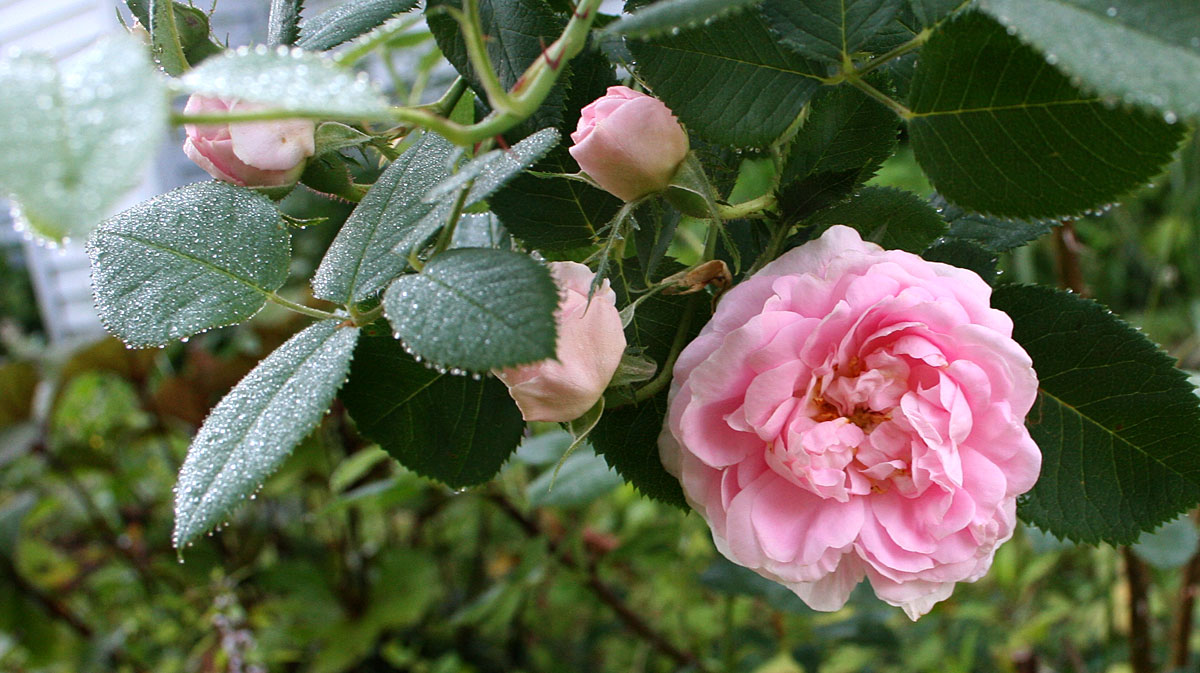
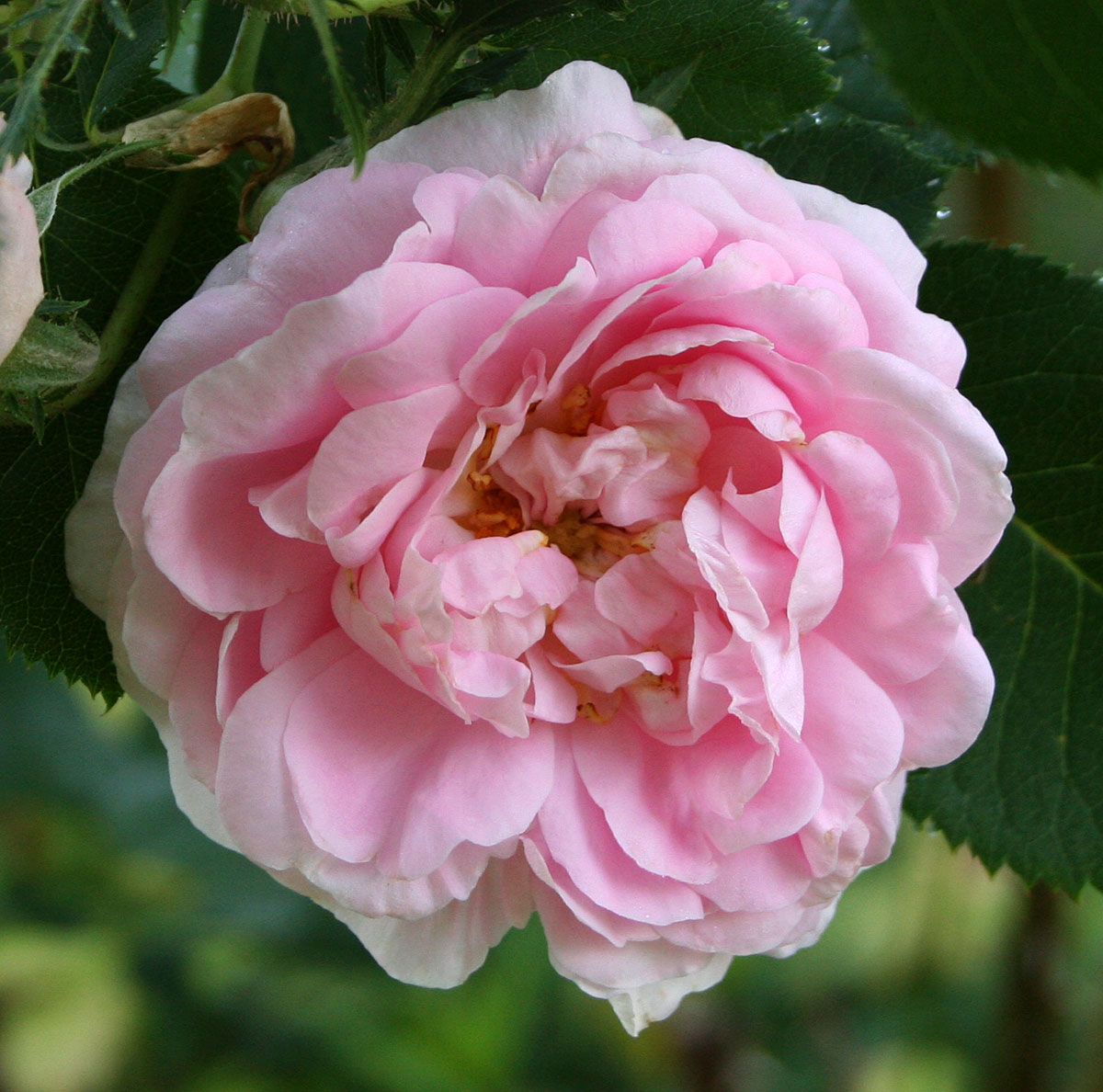
But my favorite rose (not hard to pick one when you only grow two) is ‘Cuisse de Nymphe’, which the English toned down to ‘Great Maiden’s Blush’. I planted it soley based on a passage in one of Michael Pollan’s books where he waxed poetic about it, roughly translating the French to ‘thigh of an emoted nymphe’. Sold me.

While the three plants I bought haven’t thrived (lousy soil, not enough light, too much competition), each blossom is worth the effort. And they smell even better than they look.

cuisse de nymphe

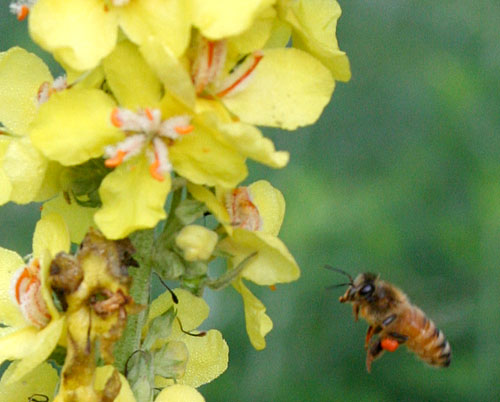
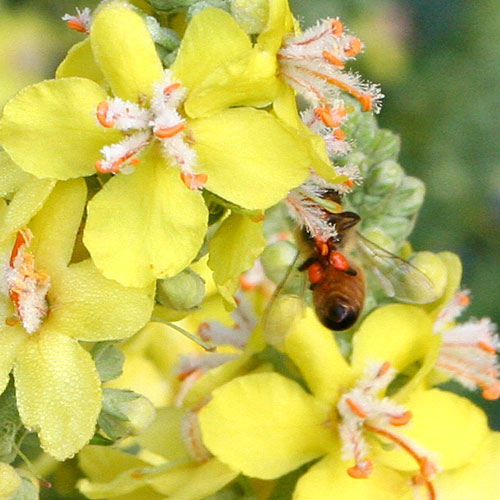
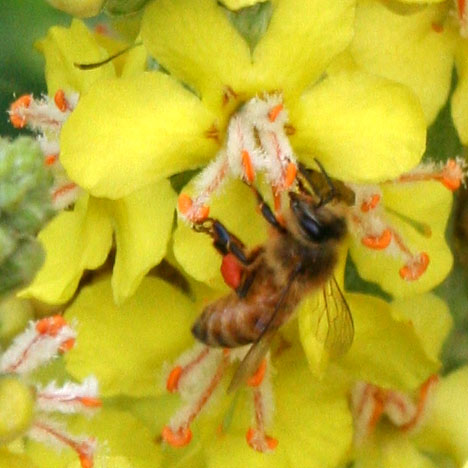
Honeybees on Verbascum

bee and verbascumWith Elly out of town this weekend, I thought I’d send the hookers home early, clean up the liquor bottles, turn on LiveEarth (Bravo or Sundance networks) and post some of my picture backlog.

I actually took these this morning. It takes a close-up image for me to actually focus on flower parts. Check out the orange ‘pollen baskets on the hind legs of the honeybees. I’m guessing it’s because they are packed full of orange pollen from the verbascums.

bee and verbascumbee and verbascum

Click on images for larger view. It’s opportunities like this that make me wish I have more techinical skills when it comes to making images.

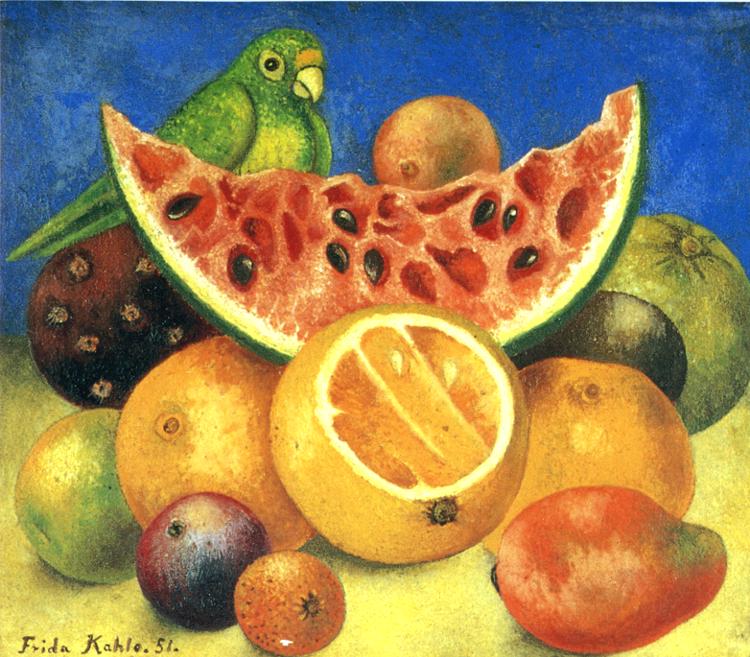
Happy Birthday Frida

fridaYesterday was Frida Kahlo’s 100th birthday. Today’s NY Times has an article and multimedia feature about a huge show featuring her work at the Palacio de Bellas Artes in Mexico City.

While Frida’s painful self-portraits fascinate me, I like to think that it was on her good days that she turned to plants as the subject of her work.

See, for example, Still Life with Parrot. I also posted some other pictures here.

Slow news day: Turnips bring Europe out of the Dark Ages

Louis XIV at Maastricht (1673)Slow new day — what with only commutations of felony sentences and such to report on. So the NY Times reports on a new 708-page tome about the modernization of Europe: The Pursuit of Glory – Europe 1648-1815. (Europe’s Rise to Power? Thank Better Roads, Revolutions of All Sorts and Turnips.)

Turns out turnips can share in the credit for bringing Europe out of the Dark Ages:

While everyone likely to read this book has heard of the scientific revolution, brought about by people like Isaac Newton, and the industrial revolution that began toward the end of the period (both well covered here), the agricultural revolution occurring at the same time was equally important. In 1648 European agriculture had not changed much since medieval times. But enclosure, manuring, crop rotation, new crops like turnips and clover, and improved breeding brought forth a large increase in food production.

One result was a golden age for the landed gentry, whose rent rolls increased sharply, and their conspicuous consumption along with them. (Robert Walpole employed 50 people just to weed his gardens.) Another result was the freeing of manpower to work in the factories that were beginning to spring up in the English countryside. The industrial revolution came about because of turnips as well as steam engines.

E.O. Wilson on pollinators

e o wilsonWashington Post reports on remarks made by sociobiologist and two-time Pulitzer prize winner E.O. Wilson as part of National Pollinator Week.

… Wilson was focused on putting self-absorbed Homo sapiens in some ecological context. If humans were to disappear — he doesn’t advocate this, for the record — the effects on the insect world would be minimal. “It’s unlikely a single insect species would go extinct except three forms of body and head lice,” he said. Close relatives of the parasites could still live on gorillas. The primal, complex web of life would continue “minus all the species we have pushed into extinction.” Ouch.

But reverse the tables, remove the insects, and what would happen? Wilson paints a Mad Max scenario, in which not only do the bees, flies, beetles, moths and butterflies disappear, but all the plants that rely on them to set fruit, nuts and seed vanish as well. No worries, you say, because two-thirds of the crops we eat are wind-pollinated. But insects, not earthworms, are the principal tillers of the soil, and without them this secret microbial universe in the soil would decline, too. Dwindling food sources and plunging human populations would bring out the beast in people, who would do what humans always do — kill each other. Wilson speaks of “an ecological dark age” where “the survivors would offer prayers for the return of weeds and bugs.”

That’s upbeat. Read the whole article. It’s short.