Blog

Clipped verbascum

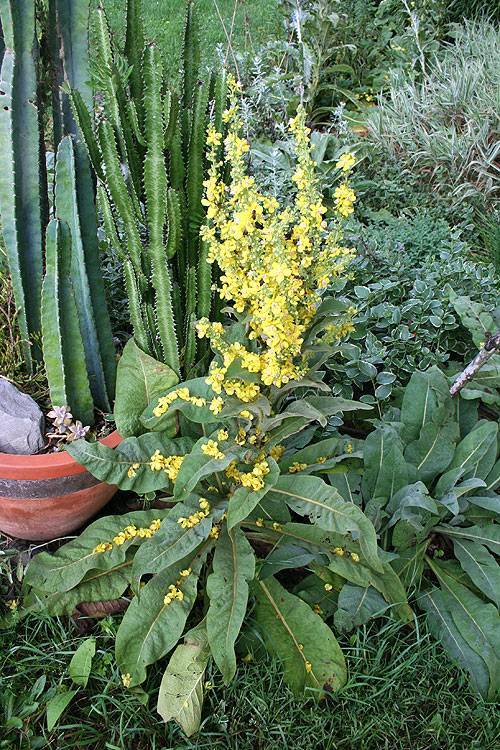
Six weeks ago, Kim (aka blackswampgirl) over at A Study in Contrasts was curious what would happen to the verbascum that I topped for one of my June bloom day scans.

It didn’t take Tracy DiSabato-Aust to predict this one: It threw out some side flower stalks from just below the cut, bloomed later and stayed shorter.

The image below also shows off one of the other features I like about this verbascum. After a good rain, the petals scatter like confetti and collect on the lower leaves.

clipped verbascum

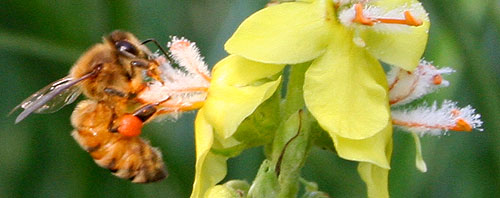
And of course, I can’t shoot a verbascum without shooting the honeybees:

bee on verbascum

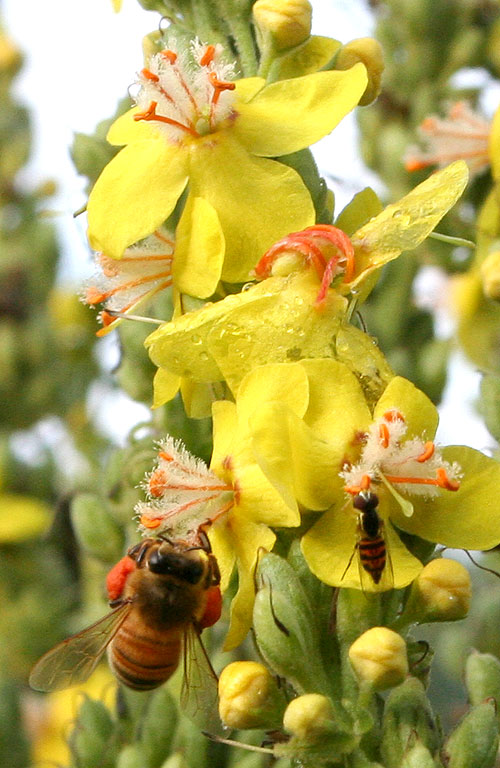
And this one with another pollinator:

pollinators on verbascum

Full disclosure: 7 ugly images from my garden

When I shoot and edit pictures, I’m painfully aware that I’m focusing on the good. Now it’s time to share the bad and the ugly. (This craziness was inspired by Elizabeth’s post over at GardenRant coming clean on her garden’s shortcomings in preparation for visitors coming to the Buffalo Garden Walk. But, at the risk of sounding boastful, my garden sucks more than hers.)
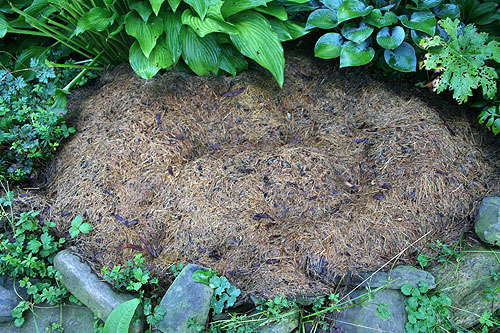
grass clippings

This was a nice little patch of sweet woodruff. But it got overrun by buttercups. Plus the deer found the hosta in the rear. I’ve got half a dozen spots around the yard where I’ve thrown in the towel — ripping everything out (rescuing a few plants that were hanging in) and piling on the grass clippings. I hit some spots with the lawn mower first, they were that bad. This fall or next spring, I’ll weed out anything obnoxious that survives and plant something more competitive.
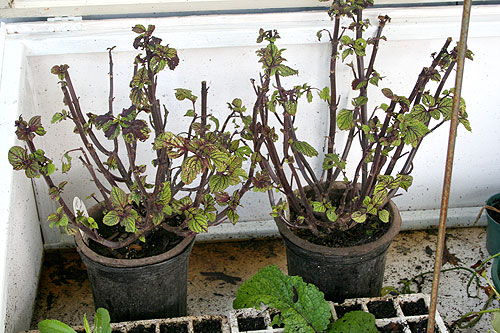
bummer coleus

Every year, I get a couple of nice coleus as a thank you for doing floral set-ups for Cornell’s graduation. Every year, I put them in a big basket in front of an ugly, foil-coated wooden box that houses potting supplies. Every year, the coleus stalls out in August. I cut it back hard and it bounces back goes until frost. This year, ‘Fish Stockings’ stalled in early July and despite my best efforts, continues to look like crap. I moved the two pots to the cold frame and hope that it may yet rebound.
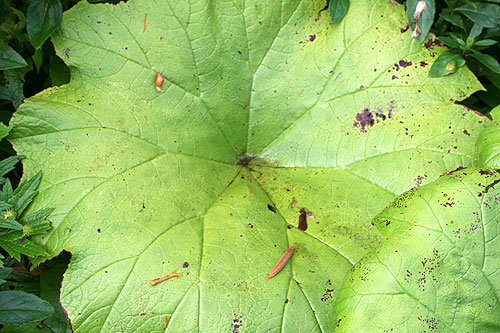
slugs on darmera

Slugs. And snails. ‘Nuf said. Actually, they haven’t been as bad as usual this year.
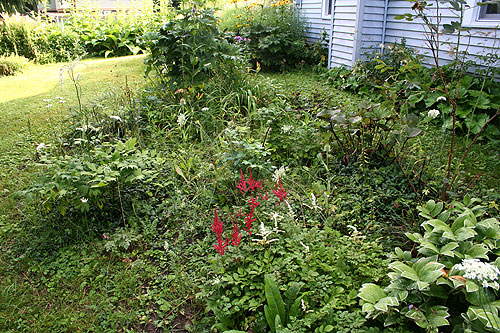
west bed, yuk

The west bed. Oy. It gets a little direct sun in the middle of the day. (House to the east. Norway spruce to the west.) Soil’s not good. Care is neglectful, at best. The ‘Cuisse de Nymphe’ roses there threatened to take over a couple years ago. So I sat back and relaxed. This year, they barely came back. Lotsa good plants in there. But unless the roses come back with a vengence, this bed is due for some serious renovation.
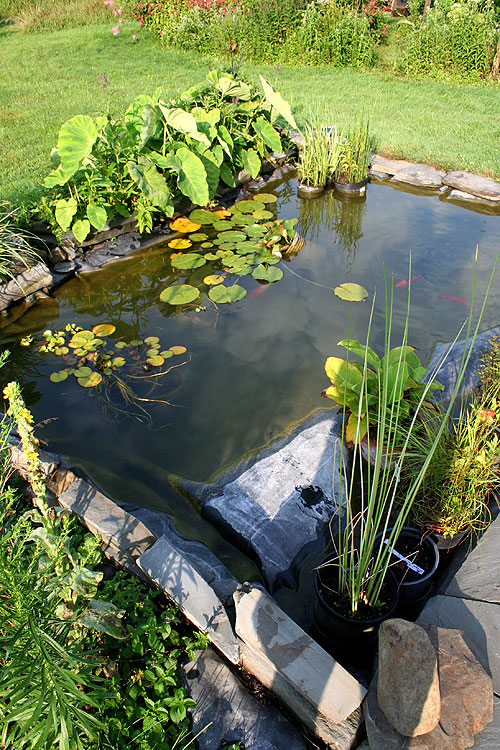
water garden

Oh my. I love the water garden. And the fish are healthy and give me no end of pleasure. But the liner has developed a serious bubble. One pot of water lilies has tipped. The other lily’s roots have detached from the soil in the pot. The cannas that I usually have in the background bed failed. (Three buckets of seemingly sound roots and only three plants came up. Dahlias and elephants ears from the same buckets did fine. Go figure.) Compare this with my banner image from a couple years ago.
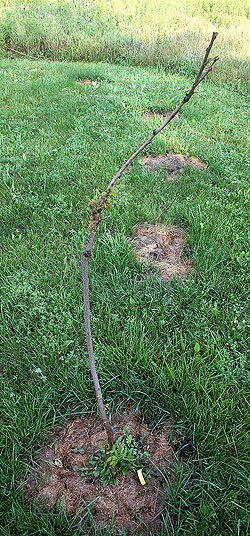
golden raintree Critters. Can’t live with them. Can’t serve them for supper. The rabbits that graze the clover in the lawn also like the redbuds (below) I transplanted out of the veggie garden this spring in their salad mix. And my experiment to see if deer like golden raintree (Koelreuteria paniculata, right) have some pretty definitive results. Oh well.

Great gardens look good everywhere all the time. I don’t think I have the patience or skill to ever get to that point. But I’m always fascinated and thrilled when something turns out great and I can always use my camera or selective vision to focus on that. The other stuff? Maybe next year.
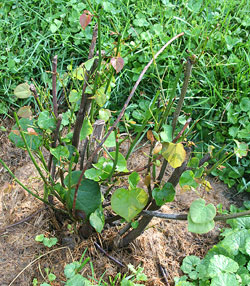
redbud

Hank’s back

Hank Wilson's Back album coverIf you’ve been going through withdrawal lately, Hank has a new post about hydrangeas (15K words worth) over at Lake County Point of View. (Thank goodness for RSS.) Go read. Enjoy.

(No, that’s not Hank. Too much hair. It’s the cover of Leon Russell’s 1973 album, Hank Wilson’s Back, a seminal classic that introduced many of us to Hank Williams and other country classics.)

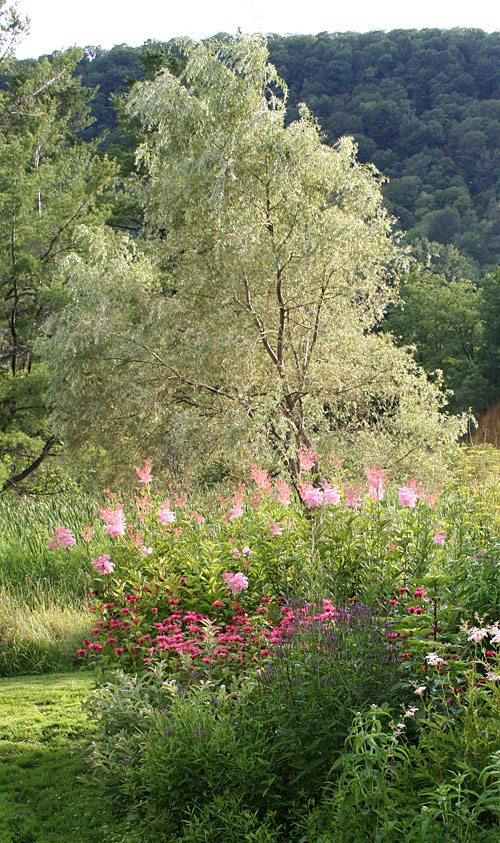
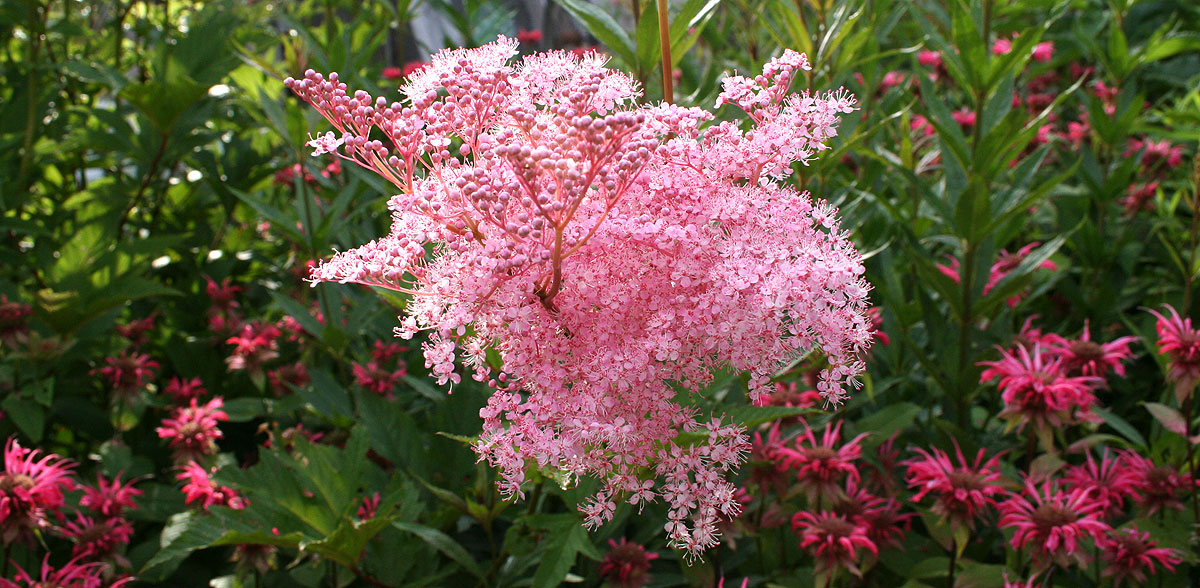
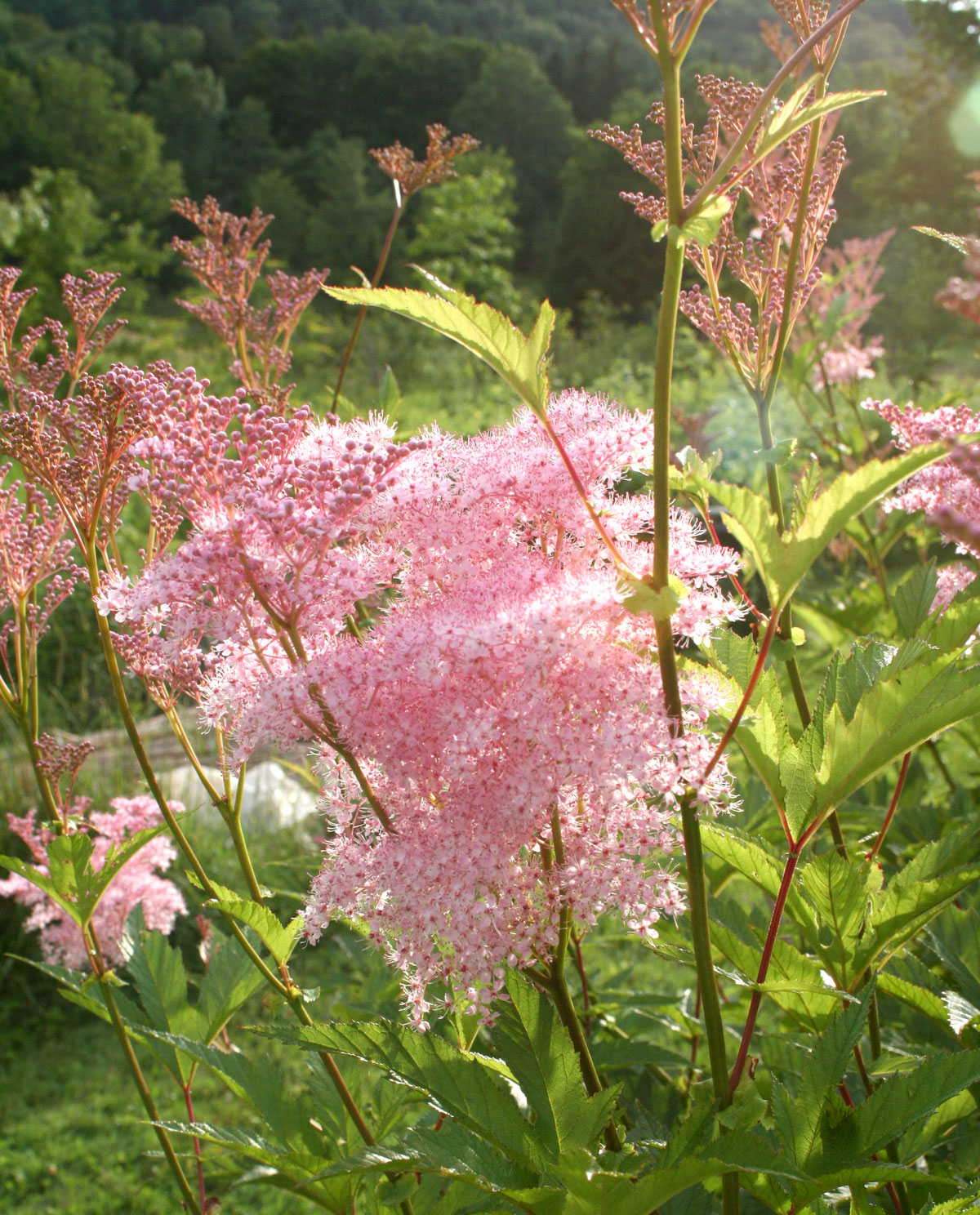
Pink Filipendula

pink filipendulaThis is the first time that I’ve had this pink Filipendula flower. It’s been in the ground a couple of years from some pots leftover from a local plant sale. (The deer have nipped off the tops before flowering in previous years.)

It goes close to 6 feet tall. So I’m guessing that it’s Filipendula rubra ‘Venusta’, but there are others that fit this description.

It’s in ‘the wet garden’ along with monarda, eupatorium, veronicastrum, Verbena hastata,  tradescantia and others that appreciate the constant and sometimes excessive moisture.

There has been a lot of discussion about PhotoShopping images on several other blogs. I did fiddle with these a little. But I was amazed with the differences in bloom color in these evening shots depending on the angles — backlit vs. sun over my shoulder vs. shooting perpendicular to the light.  The differences in my raw images were even greater than I’d ever see when fiddling around with the images in PhotoShop.

More pix …

pink filipendula

pink filipendula

Promiscuous honeybee queens = more productive hives

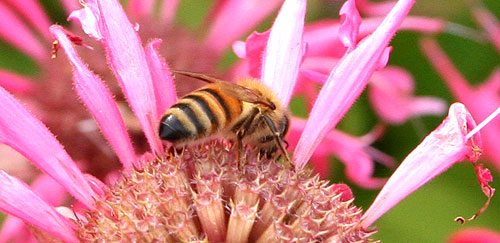
honeybee on monarda

Score another one for biodiversity.  Seems like I recall someone pointing out that narrow honeybee genetics might be one of the contributing factors to colony collapse disorder. (Read more pollinator posts.)

From a Cornell Chronicle article summarizing a paper in the July 20 issue of Science:

To study the reasons for honeybees’ promiscuity, the Cornell biologists inseminated 12 queens with sperm from 15 drones (a different set for each) and nine additional queens with sperm from a single drone (but a different one in each case). They then prompted the hives to swarm in early June to form new colonies.

“After only two weeks of building new nests, the genetically diverse colonies constructed 30 percent more comb, stored 39 percent more food and maintained foraging levels that were 27 to 78 percent higher than genetically uniform colonies,” said Mattila.

By the end of the summer, the genetically diverse colonies had five times more bees, eight times more reproductive males and heavier average body weights, mostly because of larger amounts of stored food.

By winter’s end, 25 percent of the genetically diverse colonies survived to their one-year anniversary (only about 20 percent of new honeybee colonies make it that long in upstate New York). But all of the genetically uniform hives starved to death.

“These differences are noteworthy considering colonies had similarly sized worker populations when they were first formed,” said Mattila. “Undoubtedly, our results reveal enormous benefits of genetic diversity for the productivity of honeybee colonies.”

And don’t miss Amy’s great post about bee gardening over at GardenRant, including this video from KQED: