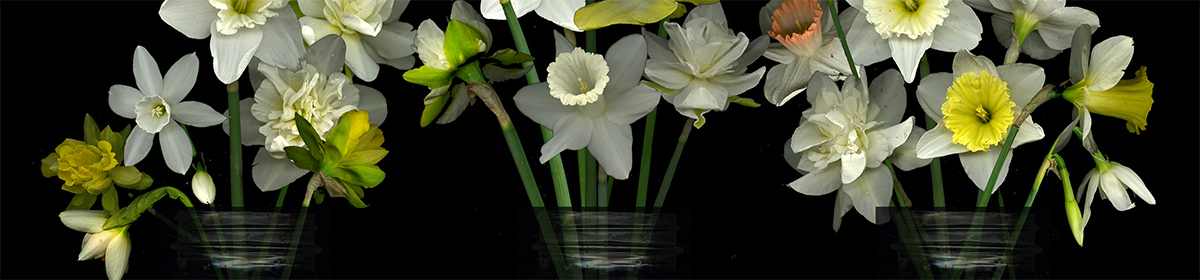
I”ve had several inquiries recently asking what lens I use to take such sharp pictures.
The short answer is I use this lens that came with the Canon Digital Rebel EOS camera I use.
The long answer is that I stuggle with getting sharply focused images for several reasons, mostly due to my own deficiencies — not the lens.
First, I tend to shoot under low light conditions — before work, after work, on overcast days (we have lots here) to avoid harsh shadows. Consequently, I usually have very shallow depth of field.
That’s compounded by my eyesight, which isn’t what it used to be. I usually use manual focus and just have a hard time seeing if I’ve got a sharp focus in the viewfinder. Particularly when shooting closeups, I’ll ‘bracket’ my focus and hope that when I get them open on the screen one of them will be presentable.
That’s also compounded by my none-too-steady hand. So even if I get an image focused the way I want, I’ll often get some shake in the image at marginal to slightly-to-long exposure times.
My limited skills are a good match for the digital age: I can make a lot of images without worrying about developing costs. Then I can choose the ones that come out OK, enhance them in PhotoShop, and display them at 500-pixels wide. (If you click on most images on the blog, you’ll see a 1200-pixel version, most of which are passable.) If I blew most of these up into large format prints, my shortcomings would be quickly revealed.
Sometimes the results are pretty good. Even a blind sow gets an acorn every now and then. Then there are times when I have a great subject and great conditions and think I’ve made a great image, only to find that on the large screen it’s hopelessly flawed. But the more I shoot, the less this happens.

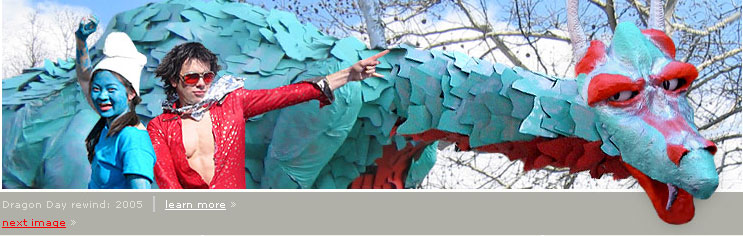
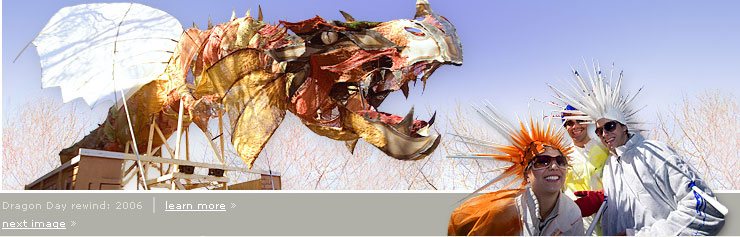
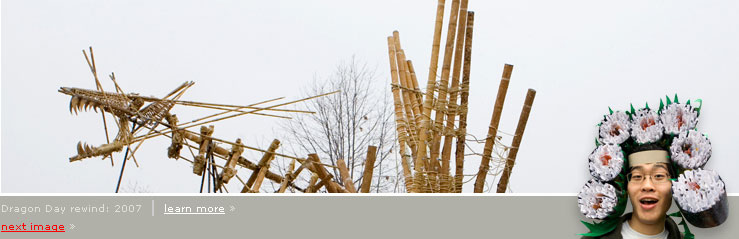
 One of the rites of early spring here is Dragon Day on the Cornell Campus. Every year, on the Friday before spring break, first year architecture students create and parade a dragon across campus, to be met by a phoenix constructed by engineering students.